


The Evolution of Architectural Styles Across Civilizations: A Journey Through Time
In the grand tapestry of human civilization, architecture has served as both a functional necessity and an artistic expression that reflects cultural values, technological advancements, and historical narratives. From ancient temples carved from stone to modern skyscrapers made of steel and glass, the evolution of architectural styles offers profound insight into how societies have developed over millennia.
This exploration delves deep into the rich heritage of architectural design across different epochs and regions, examining key movements such as Gothic Revival, Brutalism, and Sustainable Architecture. By understanding these diverse influences, we gain not only appreciation but also critical perspectives on our built environment today.
Origins in Antiquity: The Foundations of Structural Innovation
The earliest known structures date back thousands of years ago when early humans constructed simple dwellings using natural materials found in their surroundings. These primitive shelters evolved significantly through time, leading to some of the most iconic constructions seen during antiquity.
During the Neolithic period around 10,000 BCE, communities began building permanent homes out of mud bricks and timber, marking a significant shift towards organized settlement patterns. This transition laid down fundamental principles that would shape future architectural endeavors worldwide.
- Mesopotamian ziggurats: Towering step pyramids symbolized religious devotion while showcasing advanced engineering techniques for their era.
- Egyptian pyramids: Monuments of pharaonic power, they demonstrated precise geometric calculations and monumental construction capabilities unmatched until much later periods.
Greek Contributions: Harmony Between Form And Function
Greece emerged as a cradle of classical architecture characterized by its emphasis on symmetry, proportionality, and aesthetic beauty. Temples dedicated primarily to gods were designed following strict mathematical ratios which continue influencing architects even today.
The Parthenon stands as one example where Doric columns support entablatures adorned with intricate friezes depicting mythological scenes. Such designs reflected not only technical prowess but also philosophical ideals centered around orderliness and balance within society itself.
Order Systems In Greek Architecture
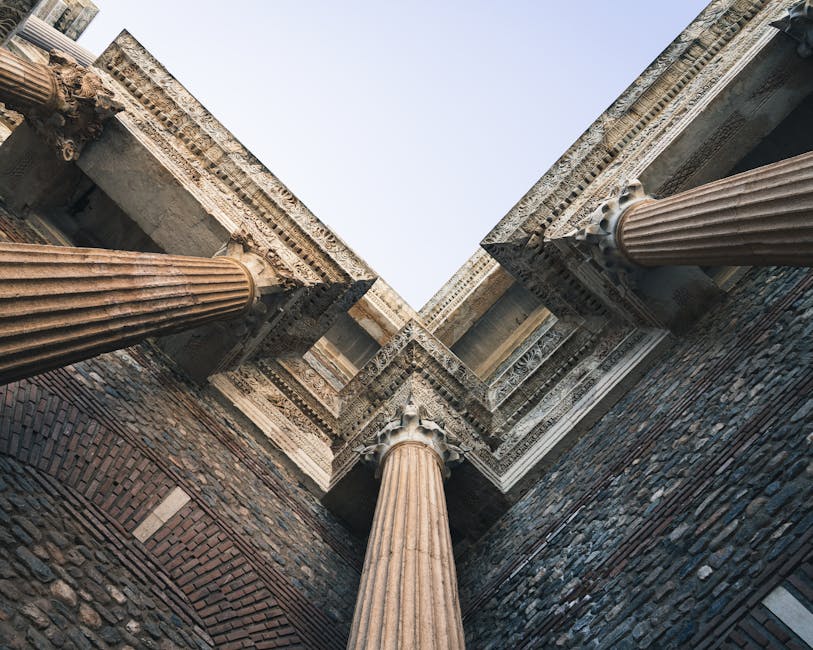
Greek architects established three primary column orders – Doric, Ionic, and Corinthian – each distinguished by unique decorative elements yet unified under shared structural principles. These systems provided flexibility allowing variations based upon regional preferences without compromising overall coherence.
For instance, whereas the sturdy Doric style was commonly used in mainland Greece due to its robust appearance; Ionians favored more ornate versions suitable for coastal cities like Miletus where trade thrived alongside artistic pursuits.
Roman Innovations: Engineering Marvels For An Empire
Rome absorbed many aspects from Greek culture including architectural forms but introduced groundbreaking innovations that enabled them to construct vast networks of roads, aqueducts, amphitheaters, and public baths across territories spanning continents.
Ancient Roman engineers pioneered use of concrete mixtures incorporating volcanic ash which allowed creation of arches capable of bearing immense loads efficiently. This advancement facilitated development of expansive domed ceilings exemplified best perhaps by Emperor Hadrian’s Pantheon.
The Colosseum: A Testament To Roman Ingenuity
The Flavian Amphitheatre, famously known as the Colosseum, showcases Rome’s mastery over spatial organization combined with theatrical appeal. With seating arrangements accommodating up to 80,000 spectators, it remains an enduring symbol of imperial ambition and civic pride.
Beneath its impressive façade lies a complex network of vaulted corridors serving dual purposes: facilitating crowd movement swiftly before events commenced and providing access routes exclusively reserved for officials and dignitaries ensuring hierarchical distinctions remained visible at all times.
Medieval Architecture: Faith And Fortification Interwoven
Following fall of Western Roman Empire, Europe entered medieval age marked largely by feudal systems where castles became essential components of defense strategies against constant invasions. Simultaneously, cathedrals rose as centers spiritual life embodying divine aspirations through towering spires reaching skyward.
Flying buttresses revolutionized gothic cathedral design enabling larger windows filled with stained glass illustrating biblical stories vividly thus transforming interiors into radiant sanctuaries bathed in ethereal light.
Renaissance Revival: Humanist Ideals Reflected In Stone
With rediscovery of classical texts came renewed interest in humanistic philosophy emphasizing individual potential rather than solely focusing on religious doctrines dominating previous centuries. Architects sought inspiration from Greco-Roman traditions integrating proportional harmony reminiscent thereof into new edifices being erected throughout Italy particularly Florence.
Pioneering figures such as Filippo Brunelleschi employed linear perspective techniques learned from studying ancient ruins thereby creating buildings whose facades appeared more dynamic visually compared traditional static appearances prevalent earlier eras.
Baroque Extravagance: Drama And Ornamentation Redefined Space
Emerging post-Reformation, baroque style emphasized emotional intensity achieved through elaborate decorations, curved lines, and dramatic contrasts between light/shadow effects inside churches designed specifically evoke awe-inspiring experiences among congregants.
Architects utilized trompe l’oeil paintings along with gilded embellishments adorning altarpieces aiming instill reverence while simultaneously captivating senses with visual splendor characteristic entire movement.
Neoclassical Resurgence: Return To Order Amidst Enlightenment Thought
As eighteenth century progressed intellectuals championed reason over superstition sparking neoclassicism revival rooted firmly within rational thought frameworks associated enlightenment thinkers like Voltaire or Kant who advocated simplicity clarity communication ideas effectively.
Public institutions such as museums libraries adopted restrained aesthetics favoring clean geometries minimal ornamentation mirroring contemporary scientific methodologies prioritizing empirical evidence over subjective interpretation.
Modernism’s Emergence: Breaking Traditional Boundaries
Late nineteenth twentieth centuries witnessed radical transformations driven partly industrialization which supplied novel materials tools previously unavailable limiting creative possibilities. Modernists rejected historical references opting instead embrace functionality abstraction shaping urban landscapes globally.
Le Corbusier proposed five points defining modern architecture including pilotis (supporting columns freeing ground level space), horizontal windows enhancing interior illumination, open floor plans promoting flexibility usage areas within buildings etc., all aimed toward optimizing living conditions systematically.
Postmodern Reactions Against Uniformity
Critics argued modernism produced sterile environments lacking contextual awareness resulting emergence postmodern approaches celebrating eclecticism pastiche blending disparate stylistic elements together intentionally create dissonant harmonies challenging viewers expectations regarding what constitutes cohesive design language.
Notable examples include Philip Johnson’s AT&T Building featuring Chippendale-style pediment atop sleek corporate tower symbolically rejecting uniformity embracing playful irreverence typical broader movement seeking reestablish identity amidst homogenized skylines.
Sustainable Architecture: Future Directions Shaped By Environmental Concerns
Contemporary discourse increasingly focuses sustainability addressing climate change issues requiring urgent action. Green roofs solar panels passive cooling mechanisms represent few initiatives contributing reduction carbon footprints footprint while maintaining comfort standards occupants require daily.
Biophilic design integrates nature indoors fostering psychological wellbeing amongst users reducing stress levels improving productivity outcomes workplace settings especially relevant current pandemic context heightened sensitivity health matters affecting populations everywhere simultaneously.
Preservation Efforts: Safeguarding Cultural Heritage Globally
Historic sites face threats ranging environmental degradation warfare neglect necessitating international cooperation implement protective measures ensure survival tangible expressions humanity’s collective memory remain accessible future generations inheritors legacy.
Organizations UNESCO World Heritage Fund provide resources guidance restoration projects undertaken various countries working closely local communities preserve authenticity integrity original structures intact without compromising progress demands ever-evolving societies.
Technology Integration: Enhancing Design Capabilities Digitally
Advancements digital technologies BIM parametric modeling enable designers simulate test prototypes virtually prior physical realization saving costs minimizing errors occurring implementation stages. Virtual reality augmented reality applications further enhance client engagement visualizing proposals accurately conveying intended impacts surrounding environments.
Smart buildings equipped sensors monitor energy consumption adjust lighting temperatures automatically according occupancy patterns optimizing efficiency reducing waste generated operations managing facilities remotely through centralized platforms accessible anywhere anytime via internet connections available modern devices.
Conclusion
Architecture is far more than mere construction—it encapsulates the essence of cultures, ideologies, and technological achievements throughout history. Understanding its progression allows us to appreciate not only aesthetic qualities but also deeper meanings embedded every structure standing testament human ingenuity perseverance.
By recognizing significance preserving architectural legacies adapting innovative solutions meet present challenges responsibly, we can ensure continued enrichment our global landscape shaped by thoughtful integration tradition innovation coexisting harmoniously within evolving world contexts.


news is a contributor at ArkitecTRUE. We are committed to providing well-researched, accurate, and valuable content to our readers.
You May Also Like


Architectural History for Beginners: Getting Started
The Evolution of Architectural Styles Through Time: A Journey Across Centuries Architecture is not merely the art of building; it...

Architectural History on a Budget: Money-Saving Tips
Exploring the Evolution of Architectural Styles Through Time The journey through architectural history reveals how human creativity has shaped structures...
Architectural History Best Practices 2025
` tag, organizing information logically under distinct headings, utilizing appropriate markup language components, maintaining brevity constraints for each paragraph segment,...
Common Architectural History Mistakes to Avoid
Common Architectural History Mistakes to Avoid In the vast realm of architectural history, many enthusiasts and professionals alike often stumble...