


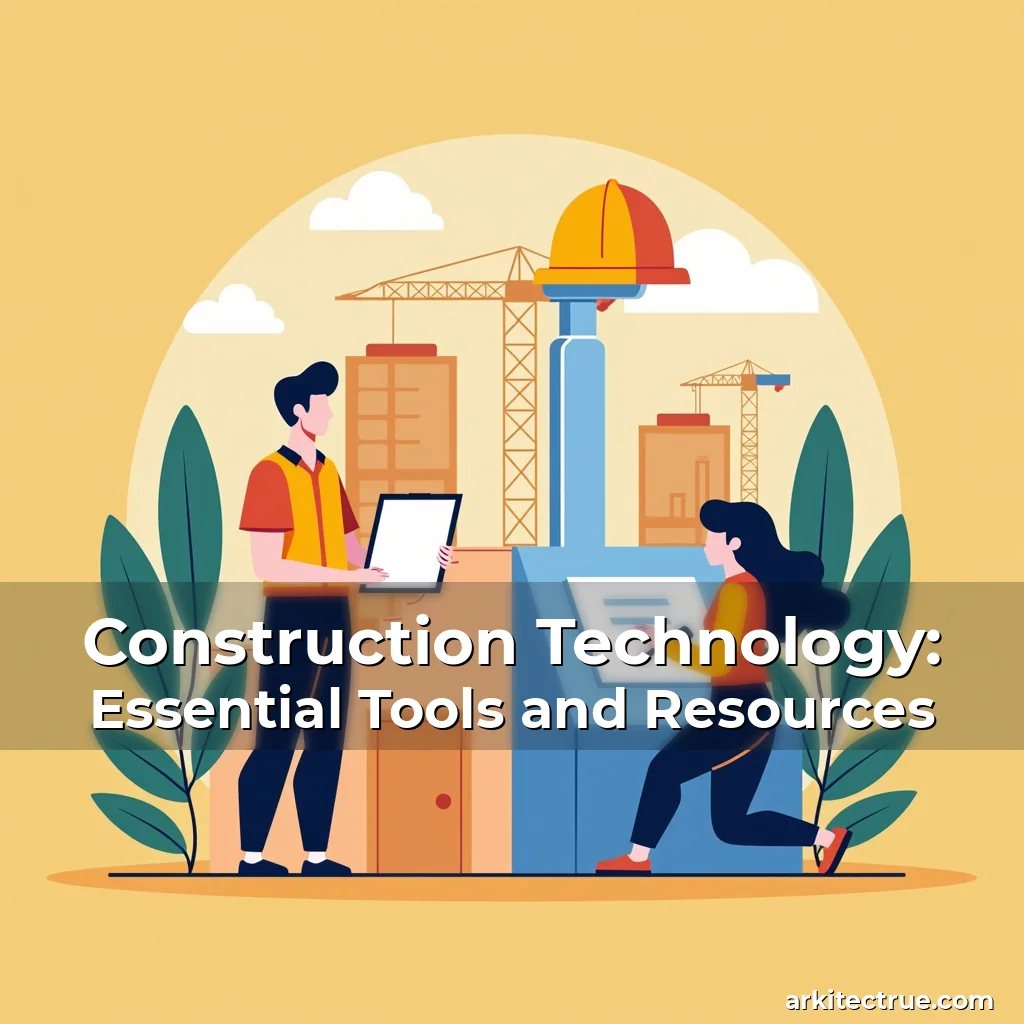
Construction Technology: Essential Tools and Resources
In an era where innovation drives progress, construction technology has emerged as a cornerstone of modern architectural practices. From advanced software solutions to cutting-edge machinery, the tools available today are transforming how buildings are designed, constructed, and maintained.
The integration of digital technologies is not only enhancing efficiency but also addressing challenges such as sustainability, safety, and cost management within the industry. This article explores essential tools and resources that professionals can leverage to stay ahead in their field.
Digital Design and Modeling Tools
Digital design and modeling have become fundamental components of contemporary architecture. Software applications allow architects and engineers to visualize complex structures before they are built, significantly reducing errors during construction.
These tools facilitate collaboration among various stakeholders by enabling real-time updates and shared access to project data. They streamline communication between designers, contractors, and clients, ensuring everyone remains aligned throughout the development process.
BIM (Building Information Modeling) stands out as one of the most influential technologies in this domain. BIM creates intelligent 3D models that contain data about every component of a building, allowing for precise planning and execution.
With BIM, teams can simulate different scenarios, analyze structural integrity, and optimize resource allocation. It promotes transparency and accountability across all phases of a project lifecycle.
- Revit: A leading BIM platform developed by Autodesk offers robust features for creating detailed architectural designs and managing construction projects efficiently.
- Fusion 360: Designed for product design and engineering, Fusion 360 provides powerful parametric modeling capabilities suitable for both mechanical and civil engineering tasks.
- CAD (Computer-Aided Design): Traditional CAD software continues to play a vital role alongside newer BIM platforms; programs like AutoCAD offer precision and flexibility for drafting plans and blueprints.
As these tools evolve, new functionalities emerge that enhance productivity while minimizing waste through accurate simulations and predictive analytics. Architects who embrace these innovations gain significant advantages over those who rely solely on conventional methods.
Automation and Robotics in Construction
Automation and robotics represent another transformative force reshaping traditional construction methodologies. These technologies enable greater accuracy, speed, and consistency when executing repetitive tasks typically performed manually.
Robotic arms equipped with sensors can perform intricate operations such as bricklaying, concrete pouring, and metal fabrication with remarkable precision. Their deployment reduces labor costs and improves overall quality control standards within projects.
Autonomous equipment further enhances operational efficiencies by handling hazardous jobs without risking human lives. Drones survey sites quickly while autonomous bulldozers level land autonomously under pre-programmed instructions.
This shift towards automation requires workforce retraining initiatives focused on upskilling existing personnel rather than replacing them entirely. Successful implementation hinges upon integrating automated systems seamlessly into current workflows.
Moreover, AI-driven algorithms assist in scheduling activities optimally based on weather forecasts, material availability constraints, and site conditions. Such intelligence leads to smarter decision-making processes at each stage of construction.
Sustainable Building Technologies
Sustainability has become increasingly critical in modern construction due to environmental concerns surrounding energy consumption and carbon emissions from buildings globally.
Green building materials like recycled steel, low-VOC paints, and sustainable timber contribute positively toward eco-friendly developments. Incorporating renewable energy sources ensures long-term viability of structures post-construction.
Eco-conscious design strategies include passive solar heating techniques which utilize natural light effectively instead of relying heavily on artificial lighting sources. Similarly, rainwater harvesting systems collect excess precipitation for non-potable uses around properties.
Smart grids integrated into electrical infrastructures help manage power distribution dynamically according to demand fluctuations throughout day-to-night cycles. This adaptability supports net-zero energy goals set forth by many nations worldwide.
Additionally, advancements in insulation materials reduce thermal bridging issues commonly found in older constructions thereby improving indoor comfort levels significantly while lowering utility bills substantially over time periods ranging from five years onward.
By adopting these environmentally responsible approaches early on during planning stages, developers ensure compliance with stringent regulatory frameworks aimed at promoting green initiatives across sectors including residential housing units commercial offices industrial complexes etcetera.
Material Science Innovations
Advancements in material science continue pushing boundaries regarding durability strength weight reduction aesthetics among other attributes crucially affecting performance outcomes associated with any given structure.
Nanotechnology enables creation of self-cleaning surfaces capable of repelling dirt pollutants naturally thus decreasing maintenance requirements considerably over extended usage durations compared against conventional alternatives.
High-performance composites combine lightweight characteristics with exceptional tensile strengths making them ideal candidates particularly suited towards aerospace automotive racing industries though applicable equally well elsewhere whenever high load bearing capacities required simultaneously alongside reduced mass considerations paramount importance placed thereupon.
Self-healing concrete represents yet another breakthrough wherein microcapsules embedded inside mixtures release healing agents automatically once cracks form thereby prolonging service life expectancy dramatically surpassing standard counterparts lacking similar regenerative properties inherently absent unless artificially introduced later stages after initial damage occurs.
Such revolutionary materials redefine expectations concerning longevity reliability resilience factors traditionally deemed static immutable aspects previously accepted norms now challenged continuously thanks ongoing research pursuits driven largely private sector investments governmental policies encouraging experimentation fostering competitive environments conducive nurturing groundbreaking discoveries soon becoming commonplace everyday applications benefitting wider publics accordingly.
Project Management Software Solutions
Effective project management lies at heart successful completion timelines budgets scope alignment expectations among diverse participants involved multifaceted undertakings characteristic typical construction endeavors.
Cloud-based platforms provide centralized repositories storing vast amounts information accessible anytime anywhere provided internet connectivity exists facilitating seamless coordination regardless geographical locations separating individuals engaged particular ventures.
Procore: Widely recognized leader construction management space Procore offers suite tools covering estimating budgeting scheduling document sharing task assignments tracking milestones delivering reports generating dashboards visualizing key metrics instantly comprehensible intuitive manner beneficial managers supervisors alike needing quick snapshots statuses progress indicators.
Buildertrend: Primarily targeted residential builders Buildertrend excels client relationship management enabling direct communication homeowners updating regularly photos videos messages alerts notifications keeping customers informed transparently proactive fashion strengthening trust relationships cultivated consistently positive experiences retained loyal clientele base expanding business opportunities organically naturally.
PlanGrid: Although recently acquired Autodesk PlanGrid specialized mobile application revolutionized blueprint accessibility allowing crews view updated drawings tablets smartphones eliminating reliance paper copies prone obsolescence inaccuracies potential misinterpretations causing costly delays rework efforts otherwise avoidable had digital versions readily available everywhere necessary times.
Selecting appropriate software depends carefully evaluating organizational needs prioritizing functions most impactful daily routines identifying gaps requiring filling through technological interventions ultimately achieving desired balance efficiency effectiveness profitability sustainability objectives pursued collectively throughout enterprise operations.
Data Analytics and Predictive Maintenance
Leveraging big data analytics allows organizations forecast potential failures identify patterns predict trends inform strategic decisions mitigating risks proactively rather reacting passively aftermath incidents occur.
Predictive maintenance utilizes sensor networks IoT devices monitor asset health condition parameters continuously transmitting collected telemetry cloud servers processed sophisticated machine learning algorithms detecting anomalies deviations thresholds established benchmarks establishing alerts triggers maintenance protocols preemptively preventing breakdowns extending lifespan machinery infrastructure assets involved.
Real-time monitoring systems track temperature humidity pressure vibrations moisture levels etcetera providing granular visibility internal workings external influences impacting structural stability integrity functional efficacy apparatuses deployed various locations throughout facilities monitored remotely controlled centrally via command centers equipped state-of-the-art visualization interfaces displaying live feeds overlays contextual metadata enhancing situational awareness operators responding swiftly accurately exigencies arise promptly.
Integration of blockchain technology ensures immutability traceability records transactions related procurement logistics supply chain management verifying authenticity origin materials components used ensuring compliance certifications regulations upheld strictly adhered minimizing chances fraud discrepancies arising complications later stages auditing verification procedures conducted independently third parties entrusted validating claims presented stakeholders seeking assurance reliability transparency accountability maintained consistently throughout entire value chains implicated therein.
These analytical capabilities empower enterprises make evidence-based choices allocate resources judiciously anticipate future demands adjust strategies flexibly adapting evolving market dynamics maintaining competitive edge amidst rapidly changing landscapes characterized intense competition relentless pursuit excellence innovation differentiation crucial distinguishing factors success sustained growth achieved collaboratively harmoniously amongst interdependent entities comprising ecosystems thriving together mutually reinforcing contributions reciprocated appropriately equitably fairly rewarding all participants contributing whole.
Emerging Trends Shaping Future of Construction Tech
Several emerging trends promise reshape landscape construction tech profoundly altering paradigms governing industry operations methodologies adopted practitioners navigating ever-evolving terrain filled uncertainties possibilities excitement anticipation.
Virtual reality (VR) augmented reality (AR) technologies immerse users simulated environments facilitating immersive walkthroughs inspections reviews approvals prior physical realization tangible forms existent realities present already. These immersive experiences enhance understanding spatial relations uncover hidden flaws detect clashes resolve conflicts early stages saving substantial costs remediation measures required otherwise.
Artificial intelligence (AI) will likely assume roles beyond mere analysis prediction venturing deeper realms automation decision-making execution tasks heretofore exclusive human expertise. Machine learning algorithms trained extensive datasets recognize patterns generate recommendations optimize schedules recommend optimal solutions problems encountered routinely faced professionals accustomed manual troubleshooting resolving dilemmas intuitively instinctively without explicit programming directives specified upfront explicitly.
Blockchain’s influence extends beyond merely securing transactions encompassing broader implications regarding smart contracts automating agreements executed digitally without intermediaries ensuring enforceability adherence stipulations outlined precisely unambiguously legible interpreted uniformly across jurisdictions cultures languages potentially global scale unprecedented reach impact magnitude.
Drone technology advances exponentially increasing aerial surveillance capabilities capturing high-resolution imagery mapping topographies assessing damages inspecting hard-to-reach areas collecting data expediently efficiently accurately surpassing limitations traditional inspection methods reliant ground crews scaffolding equipment endangering personnel exposing them hazardous conditions unnecessarily.
Collaboration between academia industry accelerates pace discovery adoption novel solutions benefiting society at large. Joint ventures partnerships incubators accelerators cultivate startups developing disruptive inventions poised transform status quo prevailing norms challenging outdated conventions embracing progressive ideals envisioning better futures crafted thoughtfully deliberately purposefully.
Challenges and Considerations in Adopting New Technologies
Despite numerous benefits associated implementing innovative technologies within construction sector several challenges persist necessitating careful evaluation before proceeding full-scale deployments.
Initial investment costs constitute primary obstacle deterring small medium-sized enterprises opting traditional methods despite long-term savings promised efficient operations streamlined processes enhanced productivity metrics measurable improvements bottom lines.
Training and Workforce Adaptation: Transitioning legacy systems new platforms requires comprehensive training sessions workshops seminars webinars virtual classrooms interactive modules ensuring employees proficient utilizing unfamiliar interfaces maximizing return investments made acquiring licenses subscriptions memberships accessing premium features functionalities exclusive subscribers.
Interoperability Issues: Incompatibilities differing formats protocols hinder smooth data exchange between disparate software packages resulting fragmented siloed information pools obstructing holistic views projects impeding cross-functional collaborations demanding additional effort reconciling inconsistencies manually correcting errors consuming precious man-hours could otherwise devoted core activities central mission statements guiding corporate visions steering strategic directions charted trajectories forward motion.
Security Concerns: Cybersecurity threats loom large especially sensitive confidential data stored云端 platforms vulnerable hacking breaches unauthorized access exploitation vulnerabilities exploited malicious actors intent financial theft intellectual property infringement reputational harm legal liabilities incurred consequences severe repercussions damaging credibility trustworthiness institutions affected negatively impacted adversely.
Regulatory Compliance: Evolving legislation mandates compliance standards vary region country necessitating continuous monitoring updates adjusting procedures aligning with prescribed guidelines avoiding penalties fines lawsuits initiated authorities enforcing rules strictly observed scrupulously followed meticulously ensured without deviation whatsoever.
To overcome these hurdles effective change management strategies essential involving all levels organization communicating clearly transparently outlining rationale behind transformations emphasizing long-term gains outweighing temporary inconveniences experienced transition phases undergoing metamorphosis gradually acclimating comfortably smoothly integrating novel methodologies conventional wisdom practices coexisting symbiotically complementing reinforcing each other synergistically elevating collective capabilities exceeding previous limits imagined achievable before undertaking ambitious initiatives daring bold steps ventures requiring courage conviction commitment pursuing noble causes advancing mankind prosperity welfare security happiness universally cherished aspirations humanity striving relentlessly ceaselessly tirelessly.
Conclusion
Construction technology encompasses a wide array of innovations designed to elevate efficiency, sustainability, and safety across the industry. By leveraging these tools, professionals can achieve superior results while addressing pressing global challenges facing communities today.
Embracing technological advancements does not mean abandoning traditional skills but rather augmenting them with modern capabilities. As the field evolves, staying informed and adaptable becomes imperative for continued success and relevance in an increasingly digitized world.


news is a contributor at ArkitecTRUE. We are committed to providing well-researched, accurate, and valuable content to our readers.
You May Also Like

Quick Construction Technology Solutions Under 30 Minutes
Quick Construction Technology Solutions Under 30 Minutes The construction industry stands at the intersection of innovation and tradition, where ancient...

Dr . Tawarat Advocates For Sustainable Smart Cities In Urban Development!
The Vision of Sustainable Smart Cities Sustainable Smart Cities are designed to minimize environmental impact while promoting economic growth and...
Professional Construction Technology: Advanced Techniques
Revolutionizing Building Practices: Cutting-Edge Innovations in Modern Construction Technology The construction industry is undergoing a transformative phase driven by groundbreaking...
Construction Technology for Small Spaces
The Future is Built: Revolutionizing Construction with Modern Technologies In an era defined by rapid technological advancements, the construction industry...