



The article delves into the building design factors that impact energy consumption and proposes a multi-objective optimization framework that leverages ML and DL for green building design. The authors propose a framework that combines machine learning and deep learning to optimize the building design process. This framework utilizes a large dataset of building information and features (e.g., building geometry, solar orientation, orientation, window sizes, etc.) to train ML and DL models.
* **Data Acquisition:** The model was built using a dataset of 160 global building sites, collected through field investigations. * **Data Preparation:** The data was prepared for model training and prediction, ensuring its suitability for the chosen model. * **Model Predictions:** The model was trained and tested using the prepared data, generating predictions for various building types and locations.
The study focused on the energy consumption of buildings, specifically in the UK. The ASHRAE dataset, a comprehensive resource for building energy data, was utilized for training and evaluation. This dataset contains a wide range of building characteristics, including occupancy, climate, and building materials.
This success can be attributed to the graph neural network model’s ability to leverage the inherent structure of the data, particularly through the use of node embedding and graph convolution. Node embedding allows the representation of each data point as a vector, capturing its essential features, while graph convolution performs a weighted summation of its neighbors, allowing the model to learn the relationships between nodes. Furthermore, the GNN model’s effectiveness in capturing relationships was also demonstrated through the analysis of feature importance.
This research explores the potential of machine learning (ML) and deep learning (DL) models to predict energy consumption. The study focuses on the relationship between climate variables and energy consumption, aiming to develop a predictive model that can accurately forecast energy demand. The researchers utilized a dataset of historical energy consumption data and climate variables, including temperature, precipitation, and wind speed.


news is a contributor at ArkitecTRUE. We are committed to providing well-researched, accurate, and valuable content to our readers.
You May Also Like

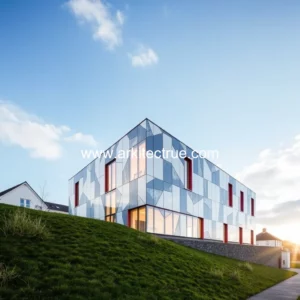
INCH Architecture recognised for Inverclyde community projects
The Impact of Social Value on INCH Architecture + DesignINCH Architecture + Design has been recognized for its commitment to...

Carolina Foods Pineville Facility Named FOOD ENGINEERING 2025 Plant of the Year
The award is a testament to the dedication and hard work of the facility's employees, who have worked tirelessly to...

Encinitas advances two proposed La Costa Avenue developments ##
The commission's decision comes after months of public hearings and community feedback, highlighting the ongoing tension between development and preservation...

PHOTOS : New Highbridge McDonald restaurant and drive - thru opens , creating 70 new jobs.
The new McDonald’s restaurant is situated at 101 Highbridge Road, Highbridge, and is designed to reflect the latest McDonald's global...