



Decoding the Evolution of Architectural Styles Through Time
The story of architectural history is not merely a chronicle of buildings but an intricate tapestry woven from cultural shifts, technological advancements, and philosophical transformations. From the earliest mud-brick dwellings of Mesopotamia to the sleek glass towers defining modern skylines, architecture has always mirrored the values, needs, and aspirations of human civilization.
This exploration delves deep into the nuanced layers that have shaped our built environment across millennia, revealing how each era’s structures speak volumes about its societal context and technical capabilities. By examining key milestones and innovations, we uncover the profound impact architecture has had on shaping communities and identities worldwide.
The Foundations of Ancient Architecture
In the cradle of civilizations—Mesopotamia, Egypt, Indus Valley, and early China—architecture emerged as both functional necessity and spiritual expression. These ancient societies developed distinct building techniques tailored to their environments and belief systems, laying down foundational principles still influential today.
Mesopotamian ziggurats, Egyptian pyramids, and Indus Valley urban planning exemplify ingenuity driven by religious devotion and practical considerations. The use of locally available materials such as sun-dried bricks, limestone, and timber reflected resourcefulness while also contributing to structural longevity when properly maintained.
Cultural symbolism played a crucial role: In Egypt, the pyramid form was deeply tied to the afterlife concept; in Mesoamerica, stepped temples represented cosmic stairways connecting earthly realms with divine ones. Such symbolic expressions reveal how architecture served dual purposes—as physical shelters and metaphysical statements.
- Terraced farming techniques influenced hillside construction methods.
- Sustainable design elements were inherent in many ancient structures, such as passive cooling strategies used in Persian windcatchers or aqueducts facilitating water management in Roman cities.
- The integration of astronomical alignments demonstrated advanced understanding of celestial movements, evident in megalithic sites like Stonehenge where solstices dictated ceremonial events.
Evolving Aesthetics in Classical Antiquity
Greek and Roman architects revolutionized spatial organization through proportion theory, column orders, and public space utilization. Their contributions established enduring aesthetic standards influencing subsequent generations up until contemporary times.
Greek temple designs emphasized harmony and balance using mathematical ratios derived from Vitruvius’ treatises. The Parthenon remains iconic for its refined columns incorporating entasis—a slight curvature correcting optical illusions created by straight lines.
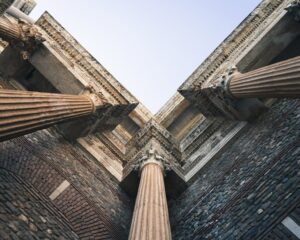
Roman engineering prowess extended beyond aesthetics, pioneering concrete technology which enabled unprecedented structural forms. Innovations like the arch, vault, and dome allowed creation of vast interior spaces previously unimaginable under earlier construction paradigms.
Dome construction reached new heights with structures like the Pantheon, whose oculus allows natural light infiltration while maintaining architectural integrity. This mastery over weight distribution became fundamental knowledge passed down through centuries.
Beyond monumental works, everyday life was enhanced by infrastructural developments including roads, bridges, amphitheaters, and bathhouses—all testaments to Romans’ commitment to civic welfare integrated within their architectural vision.
Medieval Architecture: Faith and Functionality
Following Rome’s decline, medieval Europe witnessed architectural evolution shaped largely by Christian theology. Gothic cathedrals stand out as prime examples showcasing dramatic verticality achieved through flying buttresses allowing taller walls without compromising stability.
Flying buttress innovation redistributed lateral forces away from nave walls, enabling thinner stone surfaces adorned with elaborate stained-glass windows depicting biblical narratives. This interplay between structural mechanics and artistic expression defined High Gothic achievements seen at Notre-Dame de Paris or Chartres Cathedral.
In parallel developments elsewhere, Islamic architecture flourished with geometric patterns, arabesques, and calligraphy adorning mosques and palaces. The Great Mosque of Córdoba demonstrates ingenious use of horseshoe arches combined with muqarnas creating mesmerizing ceiling effects.
While European castles focused on defensive features like thick curtain walls and moats, Asian counterparts evolved differently. Japanese shoin-zukuri style incorporated sliding doors and tatami mats reflecting flexible living arrangements adapted to seasonal changes rather than static fortifications.
Renaissance Revival and Scientific Precision
With Humanism reviving classical ideals during the Renaissance, architects sought renewed emphasis on symmetry, perspective, and scientific accuracy. Filippo Brunelleschi’s work on Florence Cathedral exemplifies this shift towards empirical measurement and rational proportions.
Brunelleschi’s dome utilized herringbone brickwork patterns ensuring even stress distribution across its massive span—an achievement requiring meticulous calculation absent prior to his time. His studies on linear perspective transformed not only art but also architectural representation methodologies.
Palladian principles further formalized these ideas through systematic application of classical orders. Andrea Palladio’s Villa Rotonda showcased perfect square plan with centralized domed roof embodying Platonic idealism translated into tangible form.
Perspective drawing techniques facilitated precise scaling of architectural plans, bridging theoretical concepts with actual implementation. This period marked transition from intuitive design approaches toward methodical analysis grounded in mathematics and observation.
Baroque Exuberance and Rococo Refinement
The Baroque movement introduced dynamic compositions characterized by grandeur, theatricality, and emotional intensity. Gian Lorenzo Bernini’s St. Peter’s Square illustrates masterful orchestration of space designed to awe visitors approaching Vatican City.
Curved facades, gilded ornamentation, and cascading fountains epitomized Baroque excessiveness, contrasting sharply with previous eras’ restrained geometries. Churches featured domed ceilings painted with illusionistic frescoes giving impression of infinite depth extending beyond physical confines.
By contrast, Rococo embraced lighter themes focusing on intimacy and grace. Interior decorations favored pastel colors, delicate carvings, and asymmetrical layouts as seen in Hôtel de Soubise’s interiors featuring playful rocaille motifs echoing nature’s fluidity.
These stylistic evolutions reflected broader societal transitions—from Counter-Reformation zeal in Catholic countries to Enlightenment-era intellectual curiosity spreading gradually through aristocratic circles seeking personal refinement over communal spectacle.
Industrial Revolution and Structural Innovation
The Industrial Age ushered in transformative materials and machinery reshaping architectural possibilities. Iron, steel, and reinforced concrete became viable alternatives challenging traditional masonry limitations regarding load-bearing capacities and spans.
Pioneering projects included Crystal Palace (1851) demonstrating prefabricated iron-and-glass assembly, setting precedent for mass production techniques applicable later in skyscraper development. Eiffel Tower symbolizes metallurgical advances made possible by precision forging processes applied to wrought iron components.
Advancements in mechanical ventilation and elevator technology addressed challenges posed by multi-story constructions. Otis elevators eliminated fears associated with ascending great heights thereby making high-rise buildings economically feasible starting around mid-19th century.
Architects began experimenting with novel shapes unachievable before due to material constraints—circular auditoriums, hyperbolic paraboloids, and cantilevered balconies becoming common features in industrial-age landmarks like Saint Pancras Station or Gherkin Building.
Modernist Movements: Breaking Tradition
Early 20th-century Modernism rejected historical references embracing instead functionality, minimalism, and new technologies. Le Corbusier’s “Five Points” methodology redefined residential design emphasizing open floor plans and pilotis freeing ground level areas beneath homes.
The International Style prioritized rectilinear forms devoid of decorative embellishments, favoring raw concrete, glass curtain walls, and modular repetition as seen in Ludwig Mies van der Rohe’s Seagram Building or Walter Gropius’ Bauhaus school complex.
Frank Lloyd Wright pioneered organic architecture integrating buildings seamlessly within landscapes through prairie-style homes utilizing horizontal planes mirroring terrain contours. Fallingwater waterfall house exemplifies this philosophy combining structure with natural surroundings harmoniously.
Postwar Brutalist architecture adopted exposed concrete finishes celebrating material honesty alongside sculptural potential—structures like Boston City Hall or Barbican Estate showcase rugged textures juxtaposed against urban anonymity fostering debates about beauty versus utility.
Contemporary Trends: Sustainability and Digital Integration
Today’s architectural landscape embraces sustainability imperatives alongside digital fabrication tools enhancing design flexibility and efficiency. Green roofs, solar panels, and rainwater harvesting systems are now standard in eco-conscious buildings aiming to reduce environmental footprints.
Vernacular revival movements seek local material applications reintroducing regional craftsmanship into global contexts, promoting cultural continuity while addressing climate-specific requirements. Bamboo usage in Southeast Asia or rammed earth techniques in North Africa illustrate adaptive reuse of indigenous resources.
Parametric modeling software enables architects to explore complex geometries once deemed impractical. Zaha Hadid Architects’ Guangzhou Opera House showcases parametric design achieving fluid forms impossible via conventional drafting methods alone.
Smart building technologies integrate sensors monitoring occupancy levels adjusting lighting/temperature accordingly thus optimizing energy consumption dynamically based upon real-time data inputs rather than fixed schedules predetermined ahead of time.
Preservation Efforts and Heritage Conservation
Recognizing value embedded in historic edifices, preservationists advocate protective measures safeguarding architectural legacies against demolition threats caused by rapid urbanization or commercial interests prioritizing profit over heritage significance.
Listed buildings receive legal protection preventing unauthorized alterations, though sometimes conflicts arise balancing conservation needs against contemporary usage demands. Adaptive reuse projects transform old factories into lofts or repurpose railway stations as transport hubs preserving original fabric while accommodating modern functions.
Organizations like UNESCO maintain World Heritage Sites highlighting exceptional cultural value deserving international recognition. Preservation efforts involve meticulous documentation including 3D scanning capturing minute details critical for accurate restoration work especially relevant post-disaster scenarios.
Public education campaigns raise awareness about importance of architectural patrimony encouraging community involvement in decision-making processes affecting neighborhood character and identity formation essential for sustainable city planning initiatives worldwide.
Future Horizons: Speculative Design and Technological Frontiers
Emerging technologies promise radical transformations in future architectural practices. Self-healing concrete containing bacteria capable of producing lime when cracks appear offers long-term durability solutions reducing maintenance costs significantly compared to traditional repair methods.
Nano-engineered materials provide superior insulation properties minimizing heat transfer through walls thus drastically cutting heating/cooling expenses normally burdening property owners annually, making such advancements highly attractive particularly for developing economies striving towards affordable housing solutions without sacrificing comfort standards.
Autonomous robotic arms employed in prefabrication facilities enable precise component manufacturing accelerating project timelines simultaneously lowering labor expenses typically incurred during manual assembly phases prone to human error variations impacting final product quality consistency levels desired by clients investing substantial capital upfront expecting flawless execution outcomes every single time they commission any given structure regardless of scale complexity involved therein.
Virtual reality simulations allow designers to experience spaces virtually before physical realization ensuring optimal user experiences aligned precisely with intended functionalities without wasting precious resources constructing prototypes repeatedly discarded after failed attempts at meeting evolving client expectations amidst ever-changing market conditions prevalent nowadays affecting almost all industries globally irrespective geographical locations occupied thereabouts unless situated remote isolated regions lacking internet connectivity altogether rendering entire spectrum digital communication obsolete entirely dependent solely face-to-face interactions limited strictly proximity distances manageable manually without electronic aids whatsoever.
Conclusion
From humble beginnings rooted in survival necessities to present-day marvels blending ecology with computation, architectural history reflects humanity’s continuous quest for progress intertwined with reverence for tradition. Each epoch contributes uniquely to collective memory expressed physically through our surrounding environments.
As practitioners engaged daily within this field, recognizing historical continuities informs better decisions shaping tomorrow’s landscapes responsibly acknowledging past lessons learned while boldly exploring frontiers yet untouched awaiting discovery by those daring enough venture forth fearlessly into unknown territories promising rich rewards fulfilling everyone involved deeply passionate about this beautiful discipline known universally simply as ‘architecture.’


news is a contributor at ArkitecTRUE. We are committed to providing well-researched, accurate, and valuable content to our readers.
You May Also Like


Architectural History Step-by-Step Tutorial
tag. The Evolution of Architectural Styles Through Time In the ever-evolving world of architecture, understanding historical styles provides invaluable insight...

Architectural History Strategies and Implementation
The Evolution of Architectural Styles Across Civilizations: A Journey Through Time In the grand tapestry of human civilization, architecture has...

Architectural History on a Budget: Money-Saving Tips
Exploring the Evolution of Architectural Styles Through Time The journey through architectural history reveals how human creativity has shaped structures...
Architectural History vs Alternatives: Complete Comparison
From Stone Monuments to Smart Cities: Tracing Humanity’s Built Legacy Through Time The story of architecture is the story of...