


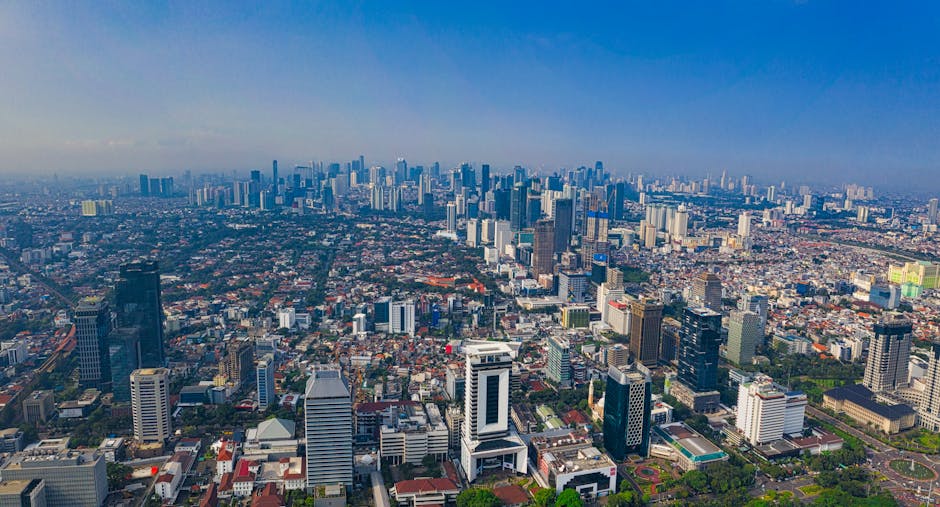
The Future Cities Blueprint: Innovations Shaping Urban Planning Today
In an era where cities are expanding at unprecedented rates, the discipline of urban planning has evolved from mere infrastructure management to a dynamic force driving sustainable development. As architects, engineers, and city planners collaborate globally, they’re reimagining how we live, work, and interact within our urban environments.
This evolving field now integrates cutting-edge technology, environmental stewardship, and social equity principles to create resilient communities that can withstand both present challenges and future uncertainties. The following exploration delves into the transformative strategies shaping modern urban landscapes.
Smart Infrastructure as the Cornerstone of Modern Cities
At the heart of contemporary urban planning lies smart infrastructure—a network of interconnected systems designed to optimize resource use and enhance quality of life. These intelligent systems leverage data analytics, IoT sensors, and AI-driven algorithms to manage everything from traffic flow to energy distribution.
Consider the case of Barcelona’s smart water grid, which uses real-time monitoring to reduce leakage by up to 25%. Similarly, Singapore’s Smart Nation initiative employs sensor networks across transportation hubs to predict congestion patterns before they occur.
- Sustainable lighting solutions: LED streetlights equipped with motion sensors cut energy consumption while improving public safety through targeted illumination.
- Predictive maintenance systems: Sensors embedded in roads and bridges detect structural weaknesses early, preventing costly repairs and ensuring long-term durability.
- Intelligent waste management: Automated bins with fill-level sensors enable optimized garbage collection routes, reducing fuel usage by over 30% in pilot programs.
These innovations demonstrate how digital transformation is reshaping traditional infrastructure models. By embedding intelligence into physical assets, cities become adaptive organisms capable of self-regulation and continuous improvement.
The integration of these technologies requires careful planning to ensure interoperability between different municipal systems. Standards bodies around the world are working to establish common protocols for data exchange and system compatibility.
Eco-Friendly Design Principles Redefining Cityscapes
Modern urban planning increasingly prioritizes ecological balance through green architecture and nature-integrated design. This approach recognizes that cities must function as ecosystems rather than isolated human habitats.
Green roofs, vertical gardens, and permeable pavements have emerged as key elements in creating climate-resilient urban environments. In Copenhagen, nearly 60% of new buildings incorporate rooftop vegetation to mitigate heat island effects and support biodiversity.
Data-Driven Environmental Impact Assessments
Advanced GIS mapping tools combined with machine learning algorithms allow planners to simulate various scenarios and measure their environmental impact with remarkable precision. One study found that integrating such analyses reduced carbon footprints by up to 40% in planned developments.
These predictive capabilities enable designers to make informed decisions about land use, building orientation, and material selection before construction begins. For example, solar panel placement optimization using topographic data increased energy efficiency by 35% in several European projects.
Moreover, ongoing performance tracking post-construction ensures that sustainability goals remain achievable over time. Real-time air quality monitors in London’s new developments provide constant feedback for necessary adjustments.
Walkable Communities: Reclaiming Human-Centric Spaces
A growing movement in urban planning focuses on designing neighborhoods that prioritize pedestrian mobility. This shift responds to rising concerns about sedentary lifestyles and declining public health metrics in densely populated areas.
Successful walkable districts combine mixed-use zoning with well-connected street networks. Portland’s Pearl District exemplifies this model, featuring residential units above retail spaces and ample pedestrian pathways connecting parks and cultural venues.
Cities implementing complete streets policies—like New York’s redesign of Times Square—are witnessing significant reductions in vehicular accidents and increases in local business revenues due to enhanced foot traffic.
Urban planners are also incorporating universal design principles to ensure accessibility for all residents, including those with disabilities. This includes wider sidewalks, tactile paving, and accessible public transit options.
Such transformations require coordinated efforts across departments, from transportation authorities to healthcare providers who benefit from healthier populations. Economic studies show that walkable neighborhoods boost property values by up to 25%.
Traffic Management Revolution Through Intelligent Systems
The evolution of transportation systems represents one of the most visible aspects of urban innovation today. Traditional road-centric approaches are being replaced with multimodal solutions that integrate various transport modes seamlessly.
Autonomous vehicle testing grounds in places like San Francisco showcase how self-driving cars could transform commuting patterns when integrated with efficient public transit systems. However, true progress depends on updating outdated zoning laws that still favor car ownership over shared mobility services.
Dedicated bike lanes protected by physical barriers—not just painted lines—have proven crucial in increasing cyclist safety. Bogotá’s Ciclovía program, which closes certain streets to vehicles every Sunday, has inspired similar initiatives worldwide.
Public transport enhancements go beyond vehicle upgrades; they involve making stations more user-friendly through better wayfinding, real-time information displays, and improved accessibility features for people with diverse needs.
Riding-sharing platforms offer additional flexibility but raise questions about regulatory frameworks that need to evolve alongside technological advancements. Finding the right balance between innovation and regulation remains a critical challenge.
Community Engagement: The Heartbeat of Successful Planning
Effective urban planning cannot succeed without meaningful participation from the communities it serves. Engaging citizens in decision-making processes fosters a sense of ownership and improves project outcomes significantly.
Participatory budgeting initiatives, where residents allocate portions of municipal funds to neighborhood improvements, have shown promising results in cities like Boston and Lisbon. These programs increase transparency and empower marginalized groups often excluded from traditional planning discussions.
Digital engagement tools—from virtual reality walkthroughs to interactive maps—allow broader participation despite geographical limitations. Denver’s recent downtown revitalization used augmented reality apps to let residents visualize proposed changes in real time.
However, genuine inclusivity requires addressing systemic barriers that prevent full citizen involvement. Language translation services, childcare provisions during meetings, and outreach efforts targeting underserved demographics help bridge existing gaps.
When implemented thoughtfully, community engagement leads to more equitable distributions of resources and greater acceptance of new developments among affected populations.
Funding Models Supporting Sustainable Development
Securing adequate financing presents one of the greatest challenges in executing ambitious urban plans. Traditional funding sources are proving insufficient for the scale of investment required in smart and sustainable cities.
Public-private partnerships (PPPs) have emerged as viable alternatives, combining government oversight with corporate expertise and capital. The High Line Park in New York successfully leveraged private donations while maintaining public control over its operations.
Impact investing—where financial returns are tied to measurable social/environmental benefits—is gaining traction among institutional investors seeking purpose-driven portfolios. Green bonds specifically earmarked for climate resilience projects now constitute billions in global markets.
Municipal bonds tailored for infrastructure renewal remain a staple financing mechanism, though innovative structures like revenue-based financing models are attracting renewed interest in the sector.
Governments are also exploring value capture mechanisms that link development profits back to infrastructure investments. Tax increment financing (TIF), for instance, channels growth-related tax revenues toward supporting the initial investments that made that growth possible.
Global Case Studies Inspiring Urban Innovation
An examination of successful urban planning initiatives around the world reveals recurring themes that consistently lead to positive outcomes. These examples serve as blueprints for other cities aiming to implement similar strategies.
Hong Kong’s high-density housing model demonstrates how vertical expansion can accommodate population growth without sacrificing livability standards. Their modular apartment designs maximize space utilization while incorporating communal recreational areas.
Vancouver’s seawall system offers a masterclass in multi-functional waterfront design, serving as a popular jogging path while simultaneously protecting against coastal erosion and providing habitat corridors for wildlife species.
Curitiba’s pioneering bus rapid transit (BRT) system established a replicable template for cost-effective mass transit solutions. Its dedicated lanes and pre-paid boarding system enabled faster commutes compared to conventional buses.
These international successes highlight the importance of context-specific adaptations. What works in one geographic region may require modification to suit another city’s unique circumstances.
By studying these exemplary cases, urban professionals gain valuable insights into scalable solutions applicable across varying socio-economic contexts and climatic conditions.
Preparing for Tomorrow’s Challenges
As cities continue to grow and face mounting pressures from climate change, urban planners must adopt forward-thinking approaches that anticipate future needs. This involves preparing for both gradual shifts and sudden disruptions alike.
Climate adaptation measures are becoming essential components of any comprehensive plan. Coastal cities are constructing massive sea walls while inland municipalities are developing flood-resistant infrastructure and emergency response systems.
Technological preparedness encompasses not only current innovations but also anticipating emerging trends. Quantum computing research may soon revolutionize traffic modeling capabilities, enabling even more precise predictions of urban dynamics.
Educational institutions play a vital role in equipping future planners with skills relevant to these evolving demands. Curricula now emphasize interdisciplinary training that combines architecture, engineering, sociology, and environmental science perspectives.
Finally, fostering international collaboration through knowledge sharing platforms helps accelerate best practice adoption. Global conferences and online forums facilitate cross-pollination of ideas that might otherwise take years to develop independently.
Conclusion
The landscape of urban planning is undergoing profound transformation driven by technological advancement, environmental awareness, and changing societal expectations. From intelligent infrastructures to community-centered designs, cities are redefining what it means to be livable spaces for future generations.
To stay ahead of these evolutionary trends, stakeholders—including architects, policymakers, developers, and residents—must engage proactively in shaping the built environment. Embracing innovation while remaining mindful of social responsibility will determine whether our cities thrive or merely survive in the decades ahead.


news is a contributor at ArkitecTRUE. We are committed to providing well-researched, accurate, and valuable content to our readers.
You May Also Like

Urban Planning: Essential Tools and Resources
Modern Challenges in Urban Development Todays urban environments face unprecedented pressures due to demographic shifts, technological advancements, and geopolitical uncertainties....

Urban Planning for Small Spaces
The Art and Science of Urban Planning: Shaping Tomorrow’s Cities Today In an era defined by rapid urbanization and environmental...

Hanoi to demolish Shark Jaw building in historic downtown district Asia News NetworkAsia News Network
The proposal, submitted by the city’s Department of Urban Planning and Environment, aims to create a more sustainable and livable...

Creating Cities for Children: The Imperative for Inclusive Urban Design
Urban Design for the Next Generation: Building Inclusive and Joyful Cities Children are often overlooked in urban planning discussions, but...