


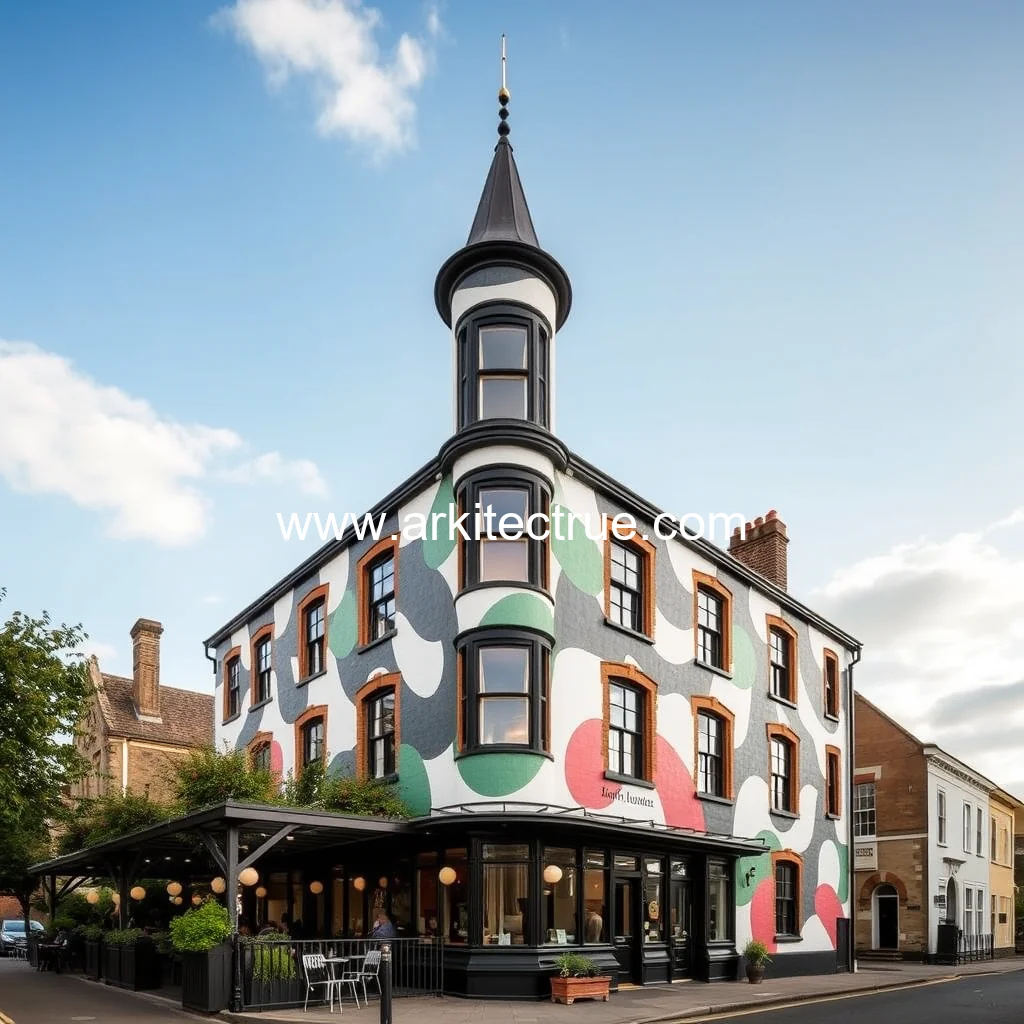
The building is a mix of Georgian and Victorian architectural styles, with a façade that is predominantly white with a few decorative elements in red and blue. The Jesus Lane entrance is now a small, unassuming door with a sign that reads “Jesus Lane” in a simple, yet elegant font.
The History of Jesus Lane
A Coaching Inn with a Poetic Past
Jesus Lane, located in the heart of Cambridge, England, has a rich history that dates back to the 17th century. The area was once a bustling hub for travelers and traders, with the Hoop Inn serving as a popular coaching inn. The inn was a significant stopover for those traveling between London and the north of England. The Hoop Inn was a favorite among travelers, offering comfortable accommodations and a warm welcome. The inn’s proximity to the city center made it an ideal location for those seeking to explore Cambridge’s historic streets and landmarks.
The History of the Pitt Club
The Pitt Club has a rich history that spans over a century and a half. Founded in 1835, the club was established in honour of William Pitt the Younger, a British politician who served as Prime Minister of the United Kingdom from 1783 to 1801. The club’s name is a testament to Pitt’s legacy, and its members have been drawn to the club’s values of intellectual curiosity and social camaraderie.
Early Years
The Pitt Club’s early years were marked by a strong sense of exclusivity. The club was initially only open to men, and its membership was limited to a select group of Cambridge University students. However, as the club grew in popularity, it began to attract women members, who were initially excluded from the club’s social events. The Pitt Club’s first female member was admitted in 2017, marking a significant milestone in the club’s history.
Expansion and Modernization
In the late 19th and early 20th centuries, the Pitt Club underwent significant changes. The club’s building was renovated, and new facilities were added to accommodate the growing membership.
The Pitt Club’s Acquisition of the Building
In 1907, the Pitt Club, a prestigious social club in Cambridge, made a significant purchase that would shape the future of the building. The club, known for its academic and social excellence, acquired the entire three-storey building, marking a major milestone in its history.


news is a contributor at ArkitecTRUE. We are committed to providing well-researched, accurate, and valuable content to our readers.
You May Also Like


Architect Designer Portland ME US Jobs
Our goal is to create a sense of community and connection among our clients, their families, and the surrounding environment.Our...

( FOCAC ) Guest Opinion : Jointly build a closer China - Africa community with shared future to push forward China - Eritrea strategic partnership - Xinhua News Agency
The summit will focus on five key areas: economic cooperation, trade, investment, infrastructure development, and people-to-people exchanges. These areas are...

Cabinet clears Rs 2 , 000 - crore Mission Mausam to boost weather forecasts , tackle climate change | India News **Please provide a title for the article.**
Mission Mausam, a multi-pronged initiative, aims to strengthen India’s early warning systems, improve data collection and analysis, and enhance the...

Yossi walter // walkthroughs of architectural marvels: unveiling the secrets of historic buildings | explore the intricacies of time-honored structures
Fast Forward Permits offers a range of services, including permit research, permit application assistance, and permit tracking. Clevrock Design, on...