


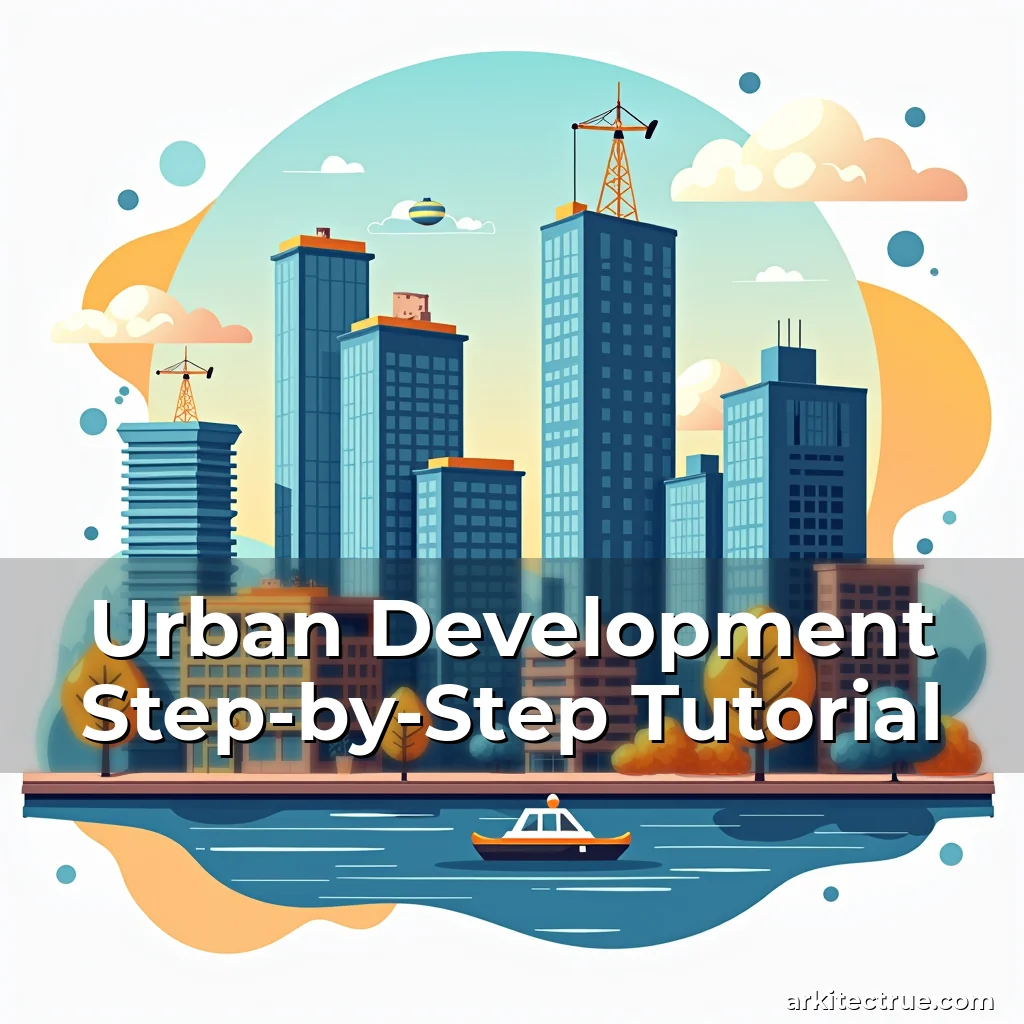
The Blueprint for Future Cities: Innovations in Urban Development
In an era marked by rapid urbanization, the blueprint for future cities is being redefined through innovative practices in urban development. This shift toward smarter, sustainable, and inclusive urban environments addresses pressing global challenges such as climate change, population growth, and resource scarcity.
With over half of the world’s population residing in urban areas, the need for effective urban development strategies has never been greater. These strategies must integrate technological advancements, environmental stewardship, and social equity to foster resilient communities capable of thriving amidst complexity.
The Role of Smart Technology in Modern Urban Planning
Smart technology plays a pivotal role in modern urban planning by enabling data-driven decision-making that enhances city functionality and livability. Through integrated systems, cities can monitor traffic patterns, manage energy consumption, and optimize waste collection processes in real time.
This digital transformation allows urban planners to create dynamic models that predict infrastructure needs based on evolving populations and economic trends. By leveraging technologies like IoT sensors and AI algorithms, municipalities are now able to respond swiftly to emerging issues such as congestion or power outages.
- Data Integration: Combining disparate datasets from various sources provides a holistic view of urban operations.
- Predictive Analytics: Anticipating future demands helps allocate resources efficiently across different sectors.
Furthermore, smart grids facilitate decentralized energy distribution networks that promote sustainability while ensuring reliability during peak usage hours. As these innovations become more widespread, they pave the way for more adaptive and responsive urban ecosystems.
Sustainable Practices Shaping Contemporary Cityscapes
The integration of sustainable practices within contemporary cityscapes represents a crucial step towards creating environmentally responsible urban environments. Green building standards ensure new developments minimize their carbon footprint through energy-efficient designs and renewable material use.
Public spaces incorporating green roofs, vertical gardens, and permeable pavements contribute significantly to improving air quality and managing stormwater runoff effectively. Such initiatives not only enhance ecological balance but also offer recreational benefits to residents.
Eco-Friendly Materials Revolutionizing Construction
The construction industry is undergoing a significant transformation with the adoption of eco-friendly materials designed to reduce environmental impact without compromising structural integrity. Advanced composites made from recycled plastics or bio-based polymers exemplify this trend.
A study conducted by the Global Alliance for Buildings and Construction revealed that using sustainable construction materials could decrease embodied carbon emissions by up to 30%. Additionally, cross-laminated timber offers a viable alternative to concrete and steel in high-rise buildings due to its lower production-related greenhouse gas emissions.
Cities pioneering these approaches often witness reduced long-term maintenance costs associated with traditional building materials subjected to weathering effects. The result is a built environment where aesthetics harmonize seamlessly with sustainability goals.
Bridging Social Equity Gaps Within Urban Frameworks
Bridging social equity gaps requires intentional efforts at every stage of urban framework design, implementation, and governance. Inclusive zoning policies ensure diverse housing options are available regardless of socioeconomic status, thereby preventing segregation and promoting social cohesion.
Mixed-income neighborhoods foster cultural exchange among inhabitants while reducing disparities related to access to essential services. Implementing affordable housing mandates ensures low-and moderate-income families have adequate shelter choices near job centers and public transit routes.
- Accessible Public Transit: Expanding mass transportation networks reduces reliance on private vehicles which disproportionately affects economically disadvantaged groups.
- Community Engagement: Participatory budgeting empowers citizens’ voices in shaping local projects affecting them most directly.
Moreover, investing in educational institutions, healthcare facilities, and parks equitably distributed across districts fosters inclusive growth opportunities irrespective of geographical location within cities.
Fostering Walkable Neighborhoods for Healthier Living Conditions
Fostering walkable neighborhoods supports healthier living conditions by encouraging physical activity as part of daily routines. Compact land use strategies prioritize pedestrian accessibility alongside efficient cycling infrastructures to discourage car dependency.
Well-designed sidewalks equipped with shaded pathways, rest benches, and street-level retail stores enhance foot traffic safety while simultaneously boosting local commerce vitality. Incorporating mixed-use zoning promotes interaction between residential units and commercial enterprises fostering vibrant communal life experiences.
Research indicates individuals living in highly walkable environments report higher levels of satisfaction and better mental health outcomes compared to those reliant heavily upon automobiles. Creating safe pedestrian zones free from vehicular encroachment is fundamental to achieving optimal wellness levels among urban dwellers.
Rethinking Transportation Networks For Efficient Mobility Solutions
Rethinking transportation networks aims at providing efficient mobility solutions tailored to meet evolving commuter behaviors and technological capabilities alike. High-capacity electric buses powered by renewable energy sources serve as key components in transitioning away from fossil-fuel dependence in metropolitan regions.
Incorporating multi-modal transport hubs facilitates seamless transfers between trains, bicycles, and shared micro-mobility devices enhancing connectivity amongst different parts of urban landscapes. Autonomous vehicle testing programs explore possibilities surrounding self-driving taxis offering flexible last-mile solutions particularly beneficial for underserved peripheral zones.
Congestion pricing mechanisms implemented selectively within densely populated corridors help regulate traffic flow rates thus minimizing pollution exposure risks faced regularly by pedestrians near busy intersections.
Creating Resilient Infrastructure Against Climate Change Impacts
Creating resilient infrastructure against climate change impacts necessitates proactive measures aimed at mitigating potential damages caused by extreme weather events increasingly becoming commonplace worldwide today.
Elevated roadways constructed above flood-prone areas prevent inundation scenarios damaging critical municipal assets while safeguarding emergency response routes necessary post-disaster recovery operations. Utilizing amphibious architecture techniques enables floating homes adaptable enough to endure fluctuating water levels safely.
Green infrastructure such as bioswales lined with native vegetation aids natural filtration processes improving surface water management efficiency around urban peripheries susceptible historically to severe rainfall episodes. Coordinating regional drought preparedness plans involving groundwater recharge systems strengthens overall system resilience against prolonged dry spells threatening freshwater supply stability.
Leveraging Community Input To Shape Future Cities
Leveraging community input ensures that future city planning reflects genuine aspirations rather than top-down impositions imposed solely by government entities alone. Digital platforms allowing virtual participation expand outreach reach beyond conventional town hall meetings traditionally limiting engagement opportunities predominantly amongst younger generations eager adopt digital communication formats.
Establishing neighborhood assemblies composed entirely volunteers drawn locally cultivates stronger sense belonging contributing positively towards collective ownership perceptions regarding changes happening visibly everyday surroundings. When empowered adequately given appropriate tools facilitators can transform passive observers actively engaged participants influencing final output decisions made collaboratively whole process itself becomes exercise democracy practicing horizontally.
Successful implementations highlight how transparently communicating planned improvements coupled closely aligned objectives stakeholders eventually lead sustained positive outcomes benefiting broader segments society even initially skeptical disengaged populace who gradually embrace novelty introduced thoughtfully considered manner respecting historical legacies preserved simultaneously advancing progressive visions forward boldly yet responsibly.
Conclusion
The journey towards constructing intelligent, equitable, verdant metropolises embodies transformative vision requiring synergistic collaboration among myriad players spanning disciplines including architects engineers sociologists technologists educators etc.
To initiate meaningful progress toward envisioned utopias merely envisioning grand narratives insufficient; instead concerted actions grounded empirically tested methodologies accompanied unwavering commitment justice prosperity necessity prevailing consistently throughout execution phases ensuring longevity success achieved collectively everyone involved irrespective origin backgrounds differences remain respected cherished celebrated integral elements forging cohesive global civilization embracing diversity unity harmony sustainably.


news is a contributor at ArkitecTRUE. We are committed to providing well-researched, accurate, and valuable content to our readers.
You May Also Like

The Future of Urban Development: Innovations Shaping Tomorrow's Cities
The Future of Urban Development: Innovations Shaping Tomorrow's Cities In an era defined by rapid technological advancements and increasing global...

Quick Urban Development Solutions Under 30 Minutes
Revolutionizing Cities: The Future of Urban Development Through Innovation and Sustainability In an era defined by rapid population growth, technological...

The Future of Cities: Sustainable Urban Development Strategies for Modern Architectural Innovation
The Future of Cities: Sustainable Urban Development Strategies for Modern Architectural Innovation In an era defined by rapid population growth...
Common Urban Development Mistakes to Avoid
The Hidden Pitfalls of Rapid Urbanization: Strategies for Sustainable Growth In an era where cities are expanding at unprecedented rates,...