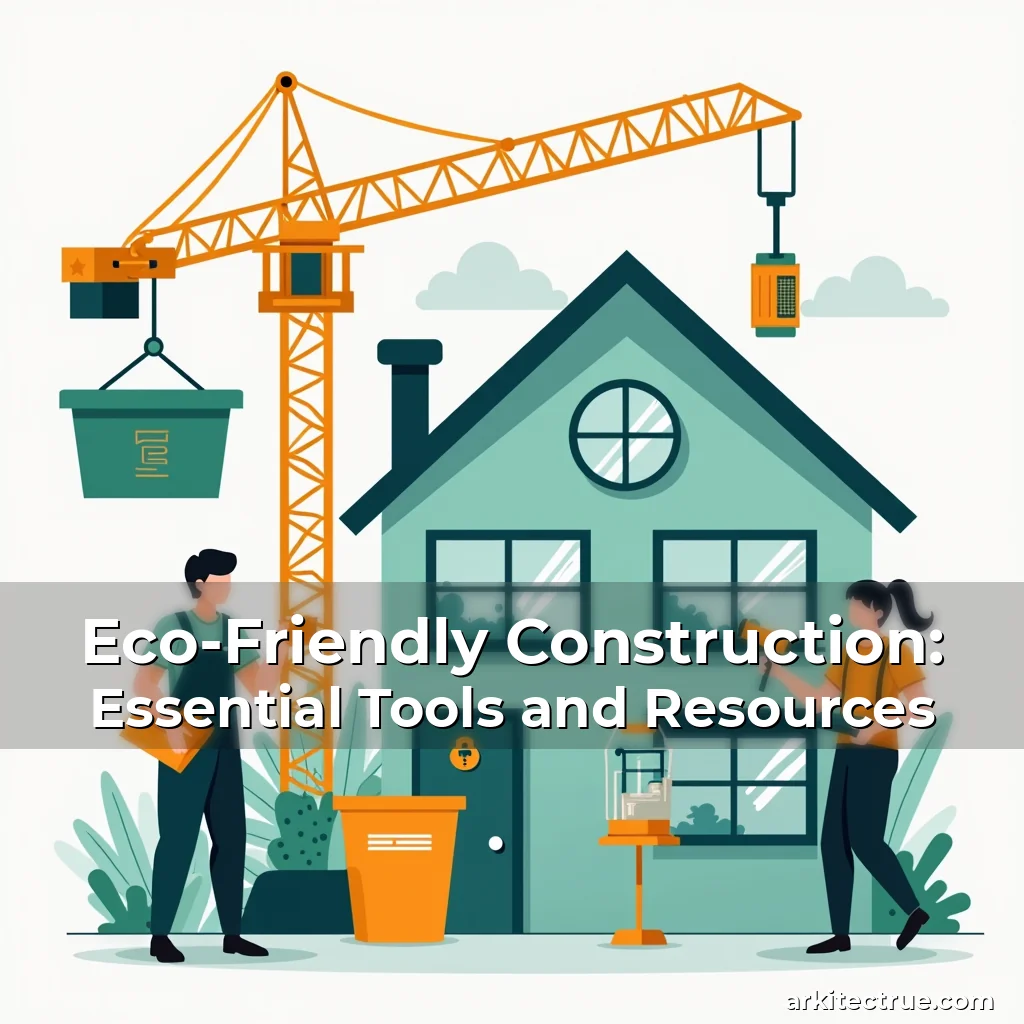
Eco-Friendly Construction: Essential Tools and Resources
In an era where environmental concerns are at the forefront of global conversations, eco-friendly construction has emerged as a vital practice within the architecture community. This approach not only addresses climate change but also promotes sustainable living through innovative building techniques.
The integration of green materials and energy-efficient systems is reshaping how we design and construct buildings today. Architects and builders now have access to advanced tools that support environmentally conscious practices without compromising functionality or aesthetics.
Sustainable Materials in Modern Architecture
Selecting appropriate materials plays a crucial role in reducing a structure’s carbon footprint. Traditional construction methods often rely heavily on non-renewable resources such as concrete and steel, which contribute significantly to greenhouse gas emissions during production and transportation.
Modern architects increasingly turn towards alternatives like bamboo, recycled metals, and engineered wood products. These options offer durability while minimizing environmental impact by utilizing waste materials or rapidly renewable sources.
Bamboo stands out due to its rapid growth rate and high tensile strength compared to conventional timber species. It can be harvested every three to five years without harming the plant itself, making it an excellent choice for flooring, structural components, and decorative elements.
Recycled metals provide another viable solution by repurposing scrap from industries or demolition sites. Using these materials reduces demand for new raw material extraction processes, conserves natural resources, and lowers overall embodied energy levels associated with construction projects.
- Engineered Wood Products: Made from fast-growing trees processed into panels or beams using adhesives designed specifically for low volatile organic compound (VOC) emissions.
- Hempcrete: A biocomposite made primarily of hemp hurds mixed with lime and water; offers insulation properties along with carbon sequestration benefits when used as part of wall assemblies.
Choosing locally sourced materials further enhances sustainability efforts by decreasing transportation-related emissions. Local sourcing supports regional economies while ensuring that supplies remain readily available without long supply chains disrupting project timelines.
Architects must balance aesthetic appeal with ecological responsibility when selecting materials. While some sustainable choices may appear unconventional initially, creative applications can yield visually striking results that align perfectly with modern architectural trends.
Energy Efficiency Strategies for Green Buildings
Designing structures that minimize energy consumption requires careful consideration of orientation, insulation quality, window placement, and ventilation strategies. Passive solar heating principles help regulate indoor temperatures naturally without relying solely on mechanical HVAC systems.
High-performance insulation materials such as spray foam or cellulose fill gaps between walls effectively preventing heat loss during colder months while keeping interiors cool during warmer seasons. Properly sealed windows reduce air leakage significantly contributing toward maintaining consistent thermal comfort conditions inside spaces.
Smart glass technology allows dynamic control over light transmission rates depending upon external weather conditions automatically adjusting glare reduction needs throughout different times of day thereby optimizing daylight usage efficiently.
Implementing cross-ventilation designs ensures fresh airflow circulates freely across open-plan areas improving occupant well-being simultaneously lowering reliance on artificial cooling mechanisms typically powered by electricity grids susceptible to fluctuating fuel prices and carbon intensity levels.
Renewable Energy Integration
Integrating renewable energy sources into building designs represents one of the most impactful ways forward regarding achieving net-zero operations goals set forth globally by various governmental agencies aiming at mitigating climate change effects over upcoming decades.
Solar photovoltaic panels mounted atop rooftops generate clean electricity powering essential functions including lighting fixtures, electronic devices, and even electric vehicle charging stations strategically placed near parking lots facilitating zero-emission mobility solutions right outside residential complexes or commercial hubs alike.
Wind turbines installed either standalone or integrated within larger urban environments harness kinetic forces present in moving air masses converting them into usable electrical power stored via battery banks capable of supplying backup energy during periods when primary generation capacities fall below required thresholds.
Geothermal exchange systems utilize underground temperature variations consistently maintained around 50°F year-round regardless of surface-level fluctuations enabling highly efficient space conditioning services applicable both commercially and domestically providing stable ambient environments irrespective of seasonal changes affecting outdoor climates severely.
Water Conservation Techniques in Eco-Friendly Design
Reducing water usage remains integral component of any comprehensive strategy aimed at promoting sustainability throughout entire lifecycle stages encompassing pre-construction phases up until post-occupancy maintenance routines involving regular cleaning schedules executed periodically according to established protocols.
Low-flow plumbing fixtures equipped with aerators decrease volume dispensed per flush cycle substantially yet maintain adequate pressure necessary fulfilling basic hygiene requirements essential everyday life activities carried out routinely within household settings or office premises respectively.
Greywater recycling systems collect wastewater generated from sinks faucets showers etc., treating it appropriately before reusing same liquid resource elsewhere within facility boundaries such bathroom basins garden irrigation lines exterior landscaping features requiring supplemental hydration inputs normally derived exclusively freshwater reservoirs subject depletion risks especially amidst prolonged drought events occurring frequently nowadays across multiple geographical regions worldwide.
Rainwater harvesting installations capture precipitation falling onto rooftops directing collected moisture downwards into storage tanks fitted with filtration units purifying captured contents prior distribution channels leading eventually toward internal consumption points designated explicitly for non-potable purposes like flushing toilets washing vehicles filling pools among others thus alleviating strain exerted upon municipal sewer networks overwhelmed regularly by excessive volumes discharged daily from countless residential dwellings industrial plants agricultural enterprises combined together forming substantial burden imposed continuously onto existing infrastructural capabilities already stretched beyond their original intended capacities.
Green Building Certifications and Standards
Recognizing achievements attained through implementation successful eco-conscious initiatives necessitates formal validation procedures conducted independently third-party organizations specialized field verifying compliance adherence standards established universally accepted benchmarks governing responsible development practices advocated widely amongst professional communities engaged designing constructing managing facilities globally.
Leadership in Energy and Environmental Design (LEED) certification serves prominent example acknowledging exceptional performance metrics achieved buildings meeting rigorous criteria related energy efficiency water conservation material selection indoor environmental quality aspects evaluated thoroughly certifying entities worthy designation bearing prestigious label signifying commitment excellence sustainable methodologies embraced voluntarily rather mandated regulations enforced legally compulsory obligations.
Other notable certifications include BREEAM, which originated in Europe and focuses similarly on assessing environmental impact alongside social considerations; and Living Building Challenge, emphasizing regenerative design approaches striving not merely minimize harm ecosystems instead actively restore damaged landscapes enhancing biodiversity increasing resilience against future climatic disturbances anticipated intensify progressively worsening due anthropogenic factors exacerbating planetary challenges faced collectively humanity currently grappling complex multifaceted issues demanding urgent coordinated responses transcending national borders uniting diverse cultures working harmoniously toward common goal preserving planet Earth sustaining life forms inhabiting it indefinitely generations ahead.
These accreditation programs incentivize innovation drive continuous improvement encouraging practitioners pursue ambitious targets exceeding minimum legal requirements fostering culture competition excellence pushing boundaries technological advancements emerging fields intersecting disciplines engineering biology chemistry physics computer science mathematics creating synergies accelerating progress revolutionizing traditional paradigms transforming industry landscape fundamentally altering perceptions values shaping contemporary society’s relationship built environment.
Case Studies: Real-World Applications of Sustainable Construction
Anchored firmly theoretical frameworks practical implementations showcase tangible outcomes demonstrating efficacy strategies employed successfully real-world scenarios validating feasibility scalability success stories inspiring replication adaptation tailored suit varying local contexts cultural preferences economic constraints geographically distinct locations possessing unique characteristics influencing decision-making processes involved determining optimal approaches best suited particular circumstances prevailing therein.
One exemplary case study involves Bullitt Center Seattle renowned “greenest commercial building” world featuring rooftop solar arrays generating surplus electricity feeding back grid offsetting operational expenses entirely while simultaneously supporting neighboring businesses reliant nearby infrastructure networks seamlessly integrating self-sufficiency communal benefit sharing resources judiciously maximizing returns investments made upfront initial construction phases yielding dividends ongoing lifetime utility derived subsequently through reduced overhead costs associated typical maintenance expenditures incurred conventional counterparts lacking comparable level sophistication embedded design philosophies guiding execution meticulous attention detail throughout entirety project lifecycle ensuring longevity durability surpass expectations projected originally conceived objectives.
Another remarkable instance exemplifies adaptive reuse strategy applied former warehouse converted vibrant co-working hub incorporating reclaimed materials salvaged demolition sites reimagined purposeful functionalities previously unattainable limitations imposed obsolete structures transformed functional spaces embodying ethos circular economy promoting regeneration rather disposal discarding remnants past reviving latent potential dormant assets resurrecting narratives histories embedded fabric urban landscapes enriching collective consciousness awareness significance heritage preservation interwoven seamlessly futuristic visions embracing continuity progression evolution human habitation environments.
Detailed analysis comparative studies conducted independent research institutions academic bodies reveal significant reductions energy consumption water wastage greenhouse gas emissions attributable adoption eco-friendly measures implemented aforementioned examples corroborating empirical evidence reinforcing necessity widespread application similar tactics across broader spectrum construction sector catalyzing paradigm shift transitioning linear models extractive practices closed-loop cycles perpetual renewal perpetuating equilibrium nature civilization advancing symbiotic existence mutual prosperity enduring peace harmony cultivated through deliberate conscious choices prioritizing ecological integrity social equity economic vitality triad pillars underpinning resilient societies thriving epochs ahead.
Challenges and Solutions in Implementing Eco-Friendly Construction
Despite growing interest adopting sustainable practices numerous obstacles hinder seamless transition traditional methods greener alternatives warranting thorough examination identifying effective remedies addressing root causes impeding progress impediments need overcome achieve full realization envisioned ideal state holistic integration environmental stewardship architectural ingenuity societal welfare.
Initial cost overruns represent foremost concern deterring developers investors pursuing profit margins imperative immediate returns discouraging long-term strategic planning favoring quick fixes temporary gains neglecting intrinsic value intangible benefits accrued gradually overtime manifesting themselves form enhanced property valuations improved tenant satisfaction elevated brand reputation distinguishing ventures superior competitors operating conventional models persistently dominating market share despite inherent disadvantages becoming increasingly apparent eroding consumer confidence apprehensions mounting regarding ethical implications unsustainable exploitation finite resources depleting irreplaceably precious reserves.
To counteract financial barriers government incentives tax credits grants subsidies allocated specifically funding projects adhering stringent environmental guidelines serve crucial role stimulating activity attracting private capital participation scaling up initiatives reaching critical mass triggering positive feedback loops amplifying momentum propelling transformational changes occurring exponentially faster pace than would otherwise achievable purely dependent individual agency isolated efforts insufficient confronting systemic issues requiring collective action unified front orchestrated coordination multidisciplinary teams comprising engineers ecologists economists policymakers educators collaborating synergistically cultivating ecosystem supportive growth flourishing innovation incubation laboratories birthing groundbreaking technologies reshaping industry norms redefining success metrics measuring true worth contributions made towards global sustainability agenda.
Technological limitations pose additional hurdles particularly remote rural areas lacking sufficient infrastructure necessary deploying cutting-edge solutions effectively implementing advanced monitoring systems tracking performance indicators evaluating effectiveness interventions undertaken systematically refining strategies dynamically adapting evolving circumstances ensuring adaptability flexibility responsiveness changing demands arising unforeseen challenges encountered throughout journey pursuit perfection continual refinement incremental improvements culminating breakthrough discoveries paving way next-generation innovations poised disrupt current status quo establish new standard excellence benchmark aspirational aspirations pursued relentlessly future generations inherit cleaner healthier safer planet legacy preserved cherished celebrated posterity.
Fostering Community Engagement and Education in Sustainable Building Practices
Cultivating informed citizenry actively participating decisions shaping urban landscapes necessitates robust educational frameworks disseminating knowledge equipping populace skills requisite discernment navigating complexities surrounding sustainable development discourse understanding nuanced trade-offs entailed various options presented stakeholders weighing pros cons accordingly.
Promoting public workshops seminars interactive sessions facilitates direct engagement professionals laypersons exchanging ideas perspectives fostering collaborative spirit pooling expertise resources tackling shared challenges confronting communities united purpose strengthening bonds trust accountability transparency governance structures ensuring equitable distribution benefits derived sustainable endeavors permeate all strata society indiscriminately benefiting everyone irrespective socioeconomic backgrounds.
Developing digital platforms hosting online courses tutorials webinars provides accessible learning avenues overcoming geographical restrictions allowing individuals acquire competencies remotely conveniently anytime anywhere augmenting reach expanding accessibility inclusivity empowering marginalized populations historically excluded mainstream dialogues reclaiming voice agency shaping policies reflecting genuine grassroots movements rooted authentic lived experiences rather top-down directives imposing uniform solutions disregard contextual differences undermining legitimacy credibility initiatives launched absent meaningful consultation inclusive participatory processes.
Establishing partnerships schools universities vocational training centers ensures curriculum incorporates latest advancements relevant sectors preparing workforce adept handling emergent technologies proficient executing eco-friendly methodologies confidently efficiently contributing positively broader ecosystem reinforcing cyclical reinforcement enhancing cumulative effect multiplying impact exponentially over time horizon spanning several decades required realizing transformative ambitions outlined visionary blueprints drafted expert minds committed service cause greater good.
Conclusion
Eco-friendly construction embodies a profound commitment to environmental stewardship, blending innovation with tradition to create sustainable spaces that endure for generations. The journey toward greener buildings is marked by continuous exploration and adaptation of new materials, techniques, and technologies.
As the architectural community embraces these practices, it becomes evident that the path to sustainability is not solitary. Collaboration across disciplines, education for future professionals, and active involvement of communities are pivotal in driving meaningful change. By integrating eco-friendly principles into every phase of construction, we pave the way for a resilient, healthy, and prosperous future for our planet and its inhabitants.

news is a contributor at ArkitecTRUE. We are committed to providing well-researched, accurate, and valuable content to our readers.
You May Also Like

Related Posts

How to Choose Eco-Friendly Construction: Expert Guide
June 20, 2026
Energy Efficiency Strategies: Powering Buildings Sustainably
November 27, 2025