
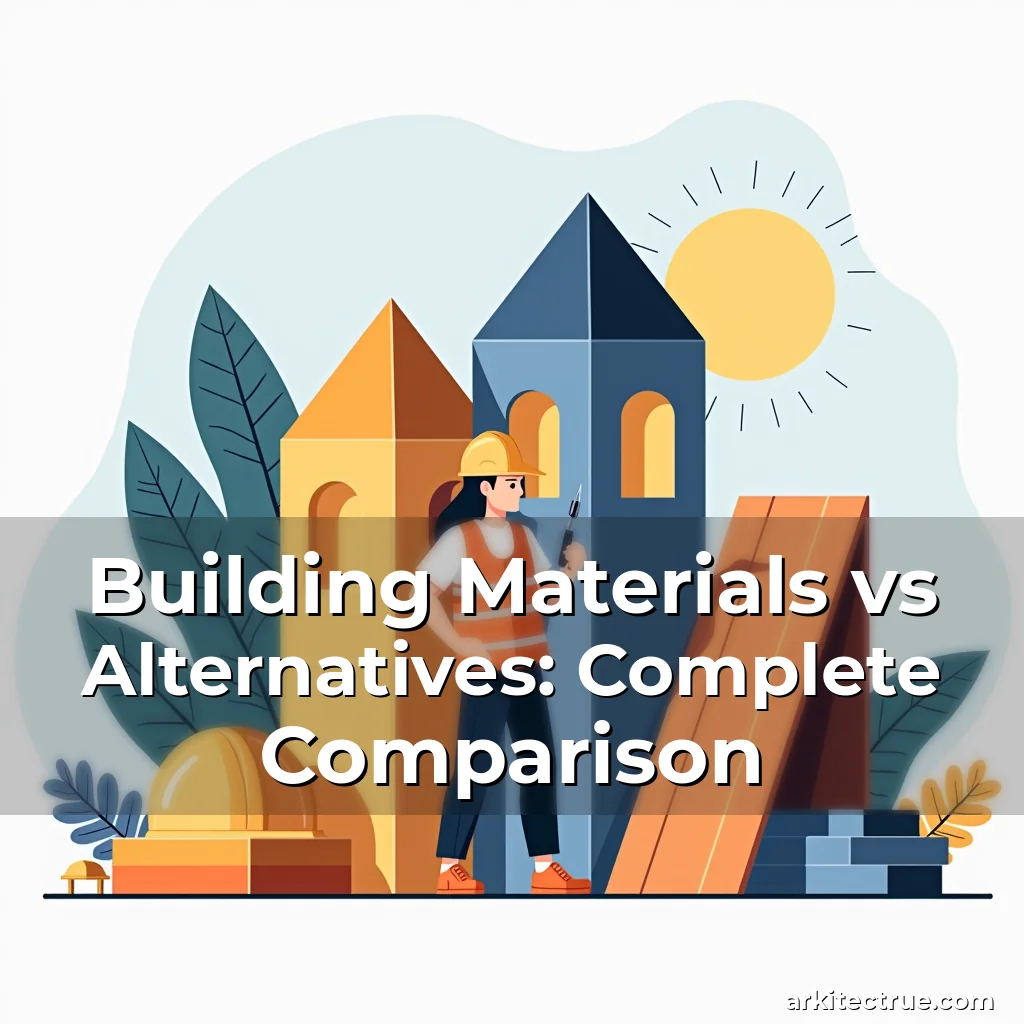
Building Materials vs Alternatives: Complete Comparison
In the ever-evolving field of architecture, the choice of building materials shapes both functionality and aesthetic expression. From ancient stone structures to modern skyscrapers, materials define the character, resilience, and sustainability of any project.
As the industry faces growing demands for ecological responsibility and technological integration, understanding the pros and cons of traditional versus emerging materials becomes essential. This guide explores the nuances behind popular choices and their alternatives, empowering professionals to make informed decisions.
Understanding Building Material Categories
The foundation of architectural design lies in selecting materials that align with structural integrity, climate conditions, and design intent. Traditional categories include natural materials like timber, stone, and clay, alongside engineered products such as steel, concrete, and glass.
Each category brings distinct advantages and limitations. For instance, natural materials often offer warmth and organic textures but may require additional treatment for longevity, whereas synthetic materials provide precision and strength at the expense of visual appeal.
- Natural materials: Include wood, stone, and earth-based substances. They emphasize sustainability but demand careful sourcing and preservation techniques.
- Engineered materials: Such as reinforced concrete and composite panels, prioritize durability and adaptability in complex constructions.
Metallic alloys like aluminum and stainless steel also play vital roles, offering corrosion resistance and flexibility in modular systems. Their application varies widely depending on load-bearing requirements and environmental exposure.
Sustainability Considerations in Modern Construction
The push toward green architecture has reshaped priorities around material selection. Builders now evaluate resources based on embodied energy, recyclability, and lifecycle assessments rather than solely focusing on upfront costs.
Eco-conscious choices include low-VOC paints, reclaimed lumber, and insulation made from recycled denim or cellulose. These options reduce environmental footprints while maintaining performance standards.
The Rise of Carbon-Negative Materials
A groundbreaking trend involves developing materials that actively remove CO₂ from the atmosphere. Innovations like biochar-infused concrete and mycelium-based composites represent promising solutions.
These technologies not only minimize emissions during production but also contribute positively to air quality over time. However, scalability remains a challenge due to current manufacturing constraints.
Despite hurdles, early adopters report improved public perception and regulatory incentives tied to net-zero goals. Architects incorporating such materials gain a competitive edge in sustainable design competitions.
Cost Analysis: Traditional vs Sustainable Options
While sustainable materials often carry higher initial prices, their long-term economic benefits frequently offset these expenses through reduced operational costs and increased property values.
For example, solar-integrated roofing systems may initially seem costly compared to standard asphalt shingles; however, energy savings over decades significantly enhance return on investment.
Government subsidies and tax credits further tilt the financial scale in favor of environmentally responsible choices. Projects meeting stringent green certification criteria can qualify for substantial rebates.
Architects must weigh immediate budgets against projected lifespan scenarios. In some cases, phased implementations allow gradual transitions toward full sustainability without straining finances.
Technological Innovations Transforming Material Science
Advancements in nanotechnology and artificial intelligence are revolutionizing how we perceive and utilize building components. Self-cleaning surfaces coated with nano-silica particles exemplify this shift.
Smart glass technology enables dynamic control over light transmission and thermal regulation, reducing reliance on mechanical heating/cooling systems. Its adaptive properties redefine passive design strategies.
Self-healing concrete infused with bacterial spores represents another leap forward. When cracks form, microorganisms produce limestone to seal damage automatically, extending infrastructure lifespans dramatically.
Digital fabrication methods like 3D printing open new possibilities for customized geometries previously unattainable with conventional processes. Buildings constructed entirely from printed concrete modules showcase this potential.
Comparative Performance Metrics Across Material Types
To determine optimal selections, architects analyze comparative metrics including compressive strength, fire resistance, moisture absorption rates, and acoustic dampening capabilities.
Concrete excels in structural rigidity but lacks breathability, making it less suitable for humid climates unless properly sealed. Timber, conversely, allows airflow yet requires protective coatings against rotting.
- Fire safety: Steel frameworks maintain stability under heat better than wood, though unprotected metal can warp rapidly in intense flames.
- Thermal conductivity: Insulating materials like aerogel demonstrate superior efficiency in minimizing heat transfer through walls and roofs.
Biomimetic materials inspired by nature continue gaining traction. Shark skin-inspired coatings repel water droplets effectively, enhancing building facades’ hydrophobic qualities.
Case Studies Demonstrating Material Innovation
Pioneering structures worldwide serve as blueprints for successful material experimentation. Singapore’s Marina One features a lush tropical garden integrated into its façade using ETFE cushions instead of traditional glazing.
This approach reduces weight burdens on supporting columns while allowing abundant daylight penetration. The result is an office space combining biophilic design principles with cutting-edge engineering.
Germany’s Solar Ark showcases photovoltaic glass incorporated seamlessly into architectural forms. By doubling as both structural elements and power generators, it redefines multifunctional spaces.
Such projects highlight how unconventional material pairings can yield functional yet aesthetically pleasing outcomes that defy traditional categorizations.
Evaluating Regional Availability and Supply Chains
Material accessibility heavily influences architectural approaches globally. Tropical regions benefit from readily available bamboo species adaptable for lightweight framing solutions.
Contrastingly, Arctic environments necessitate specialized cold-resistant concretes mixed with accelerators to counteract freezing temperatures during curing phases.
Local craftsmanship traditions also shape material preferences. Adobe brickwork persists in desert communities due to its exceptional thermal mass properties suited to extreme temperature fluctuations.
Global supply chain disruptions underscore the risks of over-reliance on imported goods. Diversifying sources through regional suppliers mitigates vulnerabilities associated with geopolitical tensions.
Fabrication Techniques Enhancing Material Utilization
Modern processing methodologies unlock hidden potentials within raw materials. Cross-laminated timber (CLT) combines dimensional stability with renewable resource attributes typically reserved for steel frames.
Laser-cutting allows intricate patterns in metals that were once considered impractical due to labor intensity. Digital modeling software optimizes cut paths minimizing waste generation.
Injection molding creates uniform polymer components ideal for repetitive installations like wall cladding systems. Automation ensures consistency across large-scale productions.
These advancements enable architects to achieve bespoke aesthetics economically while adhering to strict budgetary parameters set forth by clients.
Future Trends Shaping Material Selection
Rapid urbanization drives research into high-density construction materials capable of accommodating growing populations efficiently. Aerogel insulators show promise in creating ultra-thin yet highly effective thermal barriers.
Bioengineered materials derived from algae present exciting prospects. Their rapid growth cycles suggest scalable alternatives to petrochemical-based polymers currently dominating packaging industries.
Quantum computing simulations accelerate discovery timelines for novel composites. Predictive models identify optimal molecular configurations faster than physical prototyping alone.
Interdisciplinary collaboration between scientists, engineers, and designers propels these breakthroughs, ensuring material evolution keeps pace with architectural ambitions.
Conclusion
The landscape of building materials continues evolving at an unprecedented rate driven by environmental imperatives and technological progressions alike.
Professionals must remain vigilant in assessing both established staples and nascent innovations to craft resilient, beautiful spaces aligned with contemporary challenges.
By embracing a holistic perspective that balances economics, ecology, and esthetics, tomorrow’s architects will pioneer a built environment worthy of our collective aspirations.

news is a contributor at ArkitecTRUE. We are committed to providing well-researched, accurate, and valuable content to our readers.
You May Also Like

Related Posts
Building Materials Strategies and Implementation
October 5, 2025

Building Materials on a Budget: Money-Saving Tips
May 15, 2026

Best Building Materials Tips and Strategies
May 14, 2026