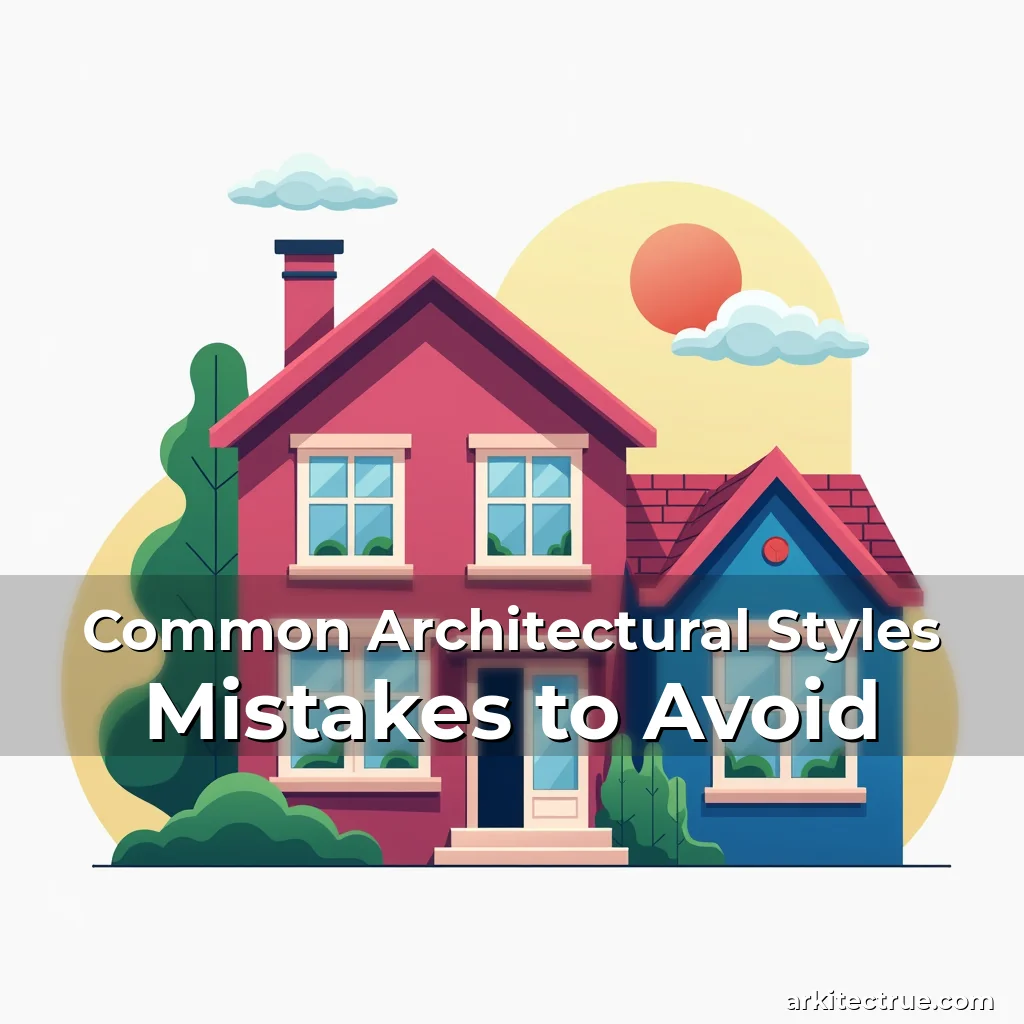
Common Architectural Styles Mistakes to Avoid
Architectural design is both an art and a science, requiring careful consideration of history, functionality, and aesthetics. However, even experienced professionals occasionally fall prey to recurring pitfalls when navigating diverse architectural styles.
Mistakes such as misinterpreting historical contexts, overlooking regional influences, or prioritizing trends over practicality can undermine a project’s integrity. Learning to recognize and avoid these errors ensures cohesive, meaningful designs that stand the test of time.
Ignoring Historical Context
One of the most frequent blunders in architectural styling involves disregarding the cultural and temporal significance of a building’s environment. Failing to align a structure with its surroundings risks creating anachronistic or jarring results.
Historic districts demand sensitivity to original design principles, while contemporary settings require thoughtful innovation. Architects must research local traditions, materials, and construction techniques to maintain authenticity.
- Research regional architecture: Study vernacular styles, including rooflines, façades, and ornamentation typical of the area.
- Respect zoning laws: Compliance with heritage protection guidelines prevents legal complications and preserves neighborhood character.
Over-Relying on Trends Without Purpose
Fashionable architectural styles often dominate conversations, yet applying them superficially without deeper purpose creates shallow, unsustainable designs. Trend-driven approaches frequently ignore site-specific challenges or client needs.
Sustainable architecture thrives on adaptability, not fleeting aesthetics. For instance, biophilic design may resonate globally, but its success hinges on integrating native vegetation suited to the local ecosystem.
The Cost of Style Over Substance
A survey by the American Institute of Architects found that 38% of clients regretted choosing trendy features that increased maintenance costs or clashed with adjacent buildings. Prioritizing novelty over utility erodes long-term value.
Designers should balance aspirational goals with pragmatic constraints. A striking glass façade, for example, requires robust insulation systems to counteract thermal fluctuations—a factor many overlook during initial conceptualization.
Poor Material Selection
Selecting inappropriate materials based solely on appearance rather than performance leads to premature deterioration. This mistake manifests in everything from roofing failures to interior finishes warping under humidity.
Natural stone may seem timeless, but its weight and water absorption properties necessitate specialized foundations and drainage solutions. Ignoring these nuances compromises both safety and longevity.
- Evaluate climatic conditions: Coastal regions demand corrosion-resistant metals, while arid areas benefit from breathable earthen plasters.
- Consider maintenance requirements: Exotic hardwoods require periodic sealing, whereas concrete offers low-maintenance durability.
Lack of Functional Design Integration
Many architectural style debates center on aesthetics alone, neglecting how forms interact with daily functions. Spaces designed purely for visual appeal often fail to accommodate human behavior patterns effectively.
Circulation paths, storage solutions, and lighting placement become secondary when priorities shift toward ornate detailing. The result? Beautiful interiors where usability suffers.
- Conduct space audits: Map out movement flows and identify potential bottlenecks before finalizing floor plans.
- Engage end-users: Soliciting feedback from future occupants helps tailor designs to actual needs rather than theoretical ideals.
Case Studies in Balance
In Tokyo, architects reimagined traditional machiya townhouses by incorporating sliding paper panels alongside steel reinforcements, achieving both cultural resonance and seismic resilience. Such hybrid approaches demonstrate intelligent synthesis.
Data shows buildings with well-integrated function and form report 25% higher occupant satisfaction rates compared to those focused exclusively on stylistic flair. Practicality and beauty are not mutually exclusive.
Neglecting Sustainability Principles
An alarming number of modern projects prioritize aesthetic coherence at the expense of ecological responsibility. From excessive energy consumption to non-recyclable materials, environmentally harmful decisions persist despite growing awareness.
Passive solar design principles, once considered niche, now offer proven methods for reducing reliance on artificial heating/cooling systems. Yet many continue designing against these fundamentals.
- Optimize passive strategies: Orient buildings to maximize daylight exposure and natural ventilation pathways.
- Use recycled components: Salvaged bricks, reclaimed wood, and repurposed metal reduce waste and infuse projects with character.
Improper Scale and Proportion Application
Scale and proportion define whether a building feels harmonious or overwhelming. Misjudging these elements leads to awkward spatial relationships between structures and their environments.
High-rise towers placed too close to smaller residential units disrupt urban fabric, while excessively grand entrances dwarf surrounding neighborhoods. These imbalances stem from inadequate contextual analysis.
- Study existing landmarks: Analyze how established buildings relate to one another through height, setbacks, and massing.
- Utilize digital modeling: Software simulations help predict visual impacts across varying vantage points and times of day.
The Psychology of Size Perception
Psychological studies reveal that humans perceive distances differently depending on vertical references. A 10-story office block surrounded by single-family homes appears disproportionately imposing without strategic buffering zones.
Applying the concept of “visual hierarchy” ensures that dominant structures don’t overshadow their surroundings. Techniques include staggered heights, recessed entries, and landscaping buffers.
Inconsistent Structural Logic
Some architects pursue stylized forms without verifying their structural feasibility, resulting in unstable or prohibitively expensive realizations. This disconnect between vision and engineering reality jeopardizes safety and budgetary control.
Complex geometries, while visually compelling, require advanced computational models to distribute loads properly. Rushed execution increases risk of catastrophic failure down the line.
- Collaborate with engineers early: Involve structural consultants during schematic phases to refine ambitious concepts.
- Test load-bearing capacities: Simulate stress scenarios for unconventional shapes before proceeding to full-scale development.
Underestimating Cultural Sensitivity
Globalization has expanded access to diverse architectural vocabularies, but careless borrowing from other cultures perpetuates stereotypes or appropriates sacred symbols. Thoughtless mimicry undermines respectful dialogue between traditions.
Adapting indigenous motifs without understanding their symbolic meanings reduces rich cultural narratives to mere decorative elements. This approach risks alienating communities whose heritages inform these expressions.
- Consult cultural advisors: Engage with representatives from relevant backgrounds to navigate appropriation concerns sensitively.
- Highlight authentic connections: When integrating cross-cultural references, emphasize shared values or universal themes rather than isolated iconography.
Failure to Plan for Adaptability
Static architectural forms struggle to evolve with changing societal needs. Designs lacking flexibility limit lifespan and force costly renovations later. Future-proofing remains an overlooked priority in many projects.
Modular construction techniques enable easy expansion or reconfiguration. Similarly, open-plan interiors allow seamless transitions between private and communal spaces as family dynamics shift.
- Incorporate adaptable fixtures: Use moveable partitions, adjustable lighting systems, and multifunctional furniture to enhance versatility.
- Predict technological shifts: Anticipate advances in smart home automation by prewiring infrastructure for future upgrades.
Overlooking Budget Constraints
Excessive ambition within tight financial parameters leads to compromised quality. Cutting corners on essential aspects like waterproofing or electrical systems may save upfront costs but invites significant long-term liabilities.
Budget allocations must account for hidden expenses—permits, inspections, and contingency reserves. Underfunded projects often face delays or require emergency funding mid-construction.
- Create realistic timelines: Allow sufficient periods for permitting processes, subcontractor coordination, and unforeseen disruptions.
- Prioritize critical investments: Allocate resources strategically, ensuring foundational elements receive adequate attention before enhancing cosmetic details.
Conclusion
Mastering architectural styles demands vigilance against common missteps that compromise both artistic intent and functional effectiveness. Recognizing these pitfalls empowers designers to craft enduring works rooted in respect for tradition, innovation, and practical wisdom.
To avoid repeating past errors, always conduct thorough research, engage multidisciplinary teams, and remain flexible enough to revise direction when necessary. True mastery lies not merely in knowing styles, but in applying them thoughtfully to serve people and places holistically.

news is a contributor at ArkitecTRUE. We are committed to providing well-researched, accurate, and valuable content to our readers.
You May Also Like