
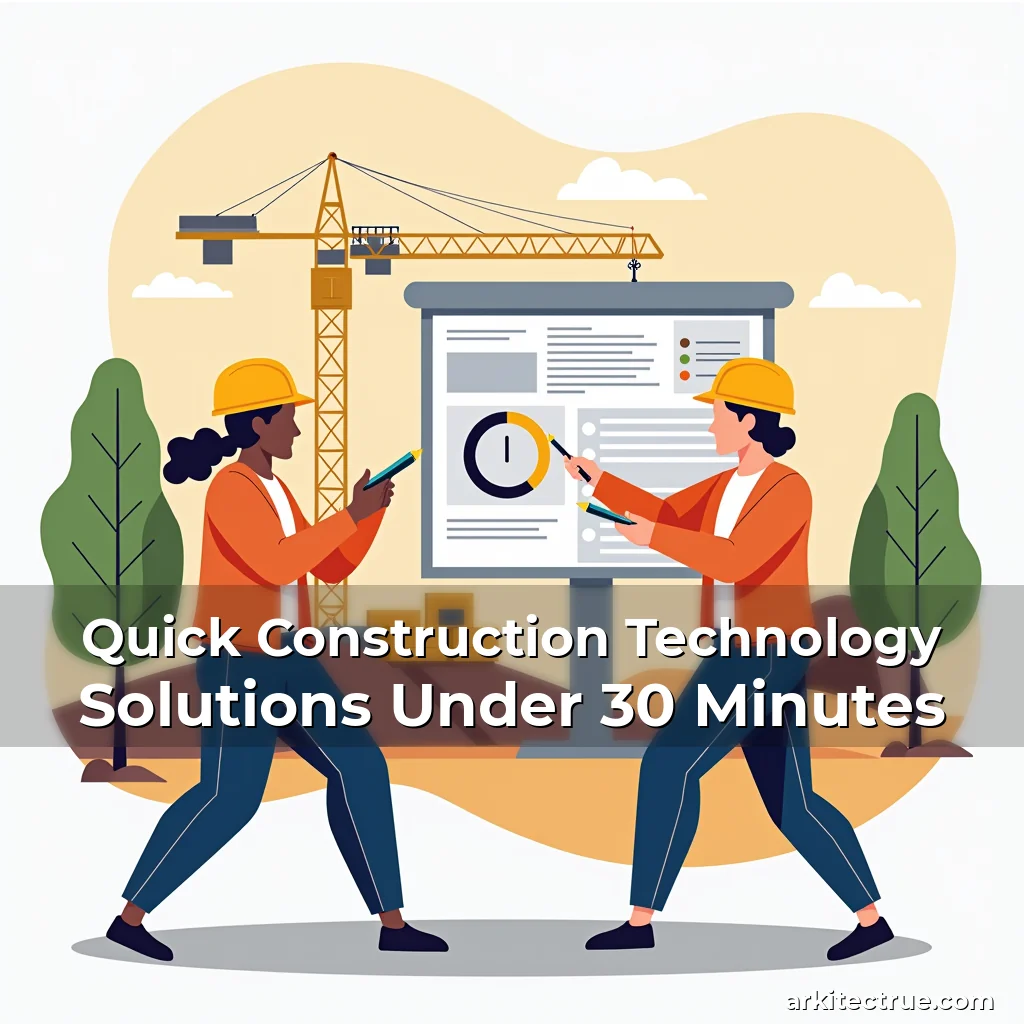
Quick Construction Technology Solutions Under 30 Minutes
The construction industry stands at the intersection of innovation and tradition, where ancient building principles meet cutting-edge digital solutions. As architects and developers seek ways to streamline operations, enhance precision, and reduce environmental impact, modern construction technology offers transformative answers. From artificial intelligence-driven design tools to robotic builders, the landscape is rapidly evolving.
This article explores groundbreaking technologies reshaping the sector, providing actionable insights for professionals aiming to stay ahead of the curve. Whether you’re designing sustainable structures or optimizing project management workflows, the right tools can unlock unprecedented efficiencies.
BIM’s Role in Modern Architectural Design
Building Information Modeling (BIM) revolutionizes architectural visualization by creating intelligent 3D models that integrate structural, mechanical, and electrical components. Unlike conventional blueprints, BIM allows teams to simulate entire buildings digitally before a single brick is laid.
This technology enables seamless collaboration across disciplines, ensuring conflicts are resolved early in the process. Engineers can analyze load distributions, while contractors visualize material placements with remarkable accuracy. Real-time updates minimize costly revisions during construction phases.
- Collaborative Efficiency: Architects, engineers, and subcontractors access shared model data simultaneously, reducing communication errors.
- Cost Savings: Early detection of clashes saves millions annually by preventing last-minute adjustments on-site.
Drones Transforming Site Surveying
Aerial drones equipped with high-resolution cameras and LiDAR sensors are redefining site surveying methodologies. These unmanned devices collect precise topographical data much faster than traditional ground-based surveys.
Architects benefit from instant aerial maps that reveal terrain features invisible from street level. This data informs better drainage plans, foundation designs, and landscaping layouts. Drone-generated orthomosaics provide a bird’s-eye view critical for large-scale developments.
Case Study Insights
A recent housing development in Colorado reduced its pre-construction timeline by 60% using drone mapping. Contractors identified slope instability issues weeks before excavation began, averting potential delays.
These findings suggest that integrating drone technology isn’t optional—it’s essential for modern project planning. Surveys once taking days now complete in hours with minimal human intervention.
Robotic Masonry Systems Revolutionizing Bricklaying
Robotic bricklayers represent a leap forward in manual labor automation. Machines like SAM (Semi-Automated Mason) lay bricks at speeds unattainable by humans, maintaining consistent mortar joint thickness.
These robots operate alongside skilled masons rather than replacing them entirely. Their precision reduces material wastage significantly while accelerating wall assembly times. Safety improves too, minimizing exposure to repetitive strain injuries.
- Speed Increase: A robot can lay approximately 800 bricks/hour compared to 300 manually.
- Mortar Optimization: Automated systems apply exact amounts of mortar, saving around 15% in material costs.
Artificial Intelligence in Structural Engineering
AI algorithms are augmenting structural engineering analyses by processing vast datasets instantly. Machine learning models predict stress distribution patterns in complex geometries previously unsolvable via manual calculations.
Engineers input variables like wind loads and seismic activity, then receive optimized beam dimensions and reinforcement schedules within seconds. Predictive analytics also forecast material fatigue over time, enhancing long-term durability assessments.
Current Applications
In Tokyo, AI-assisted simulations helped engineer earthquake-resistant skyscrapers capable of absorbing seismic shocks without internal damage. Similar systems are being tested globally for bridge reinforcements.
While still evolving, these capabilities promise to redefine structural integrity standards worldwide. Integration continues with Building Information Modeling platforms for holistic analysis.
Sustainable Materials Through Advanced Manufacturing
New fabrication techniques enable production of environmentally friendly construction materials at scale. Cross-laminated timber (CLT), made by layering wood panels perpendicular to each other, provides strength comparable to reinforced concrete yet sequesters CO₂.
Self-healing concrete containing bacteria that produce limestone when exposed to water is another breakthrough. It repairs microcracks autonomously, extending infrastructure lifespans dramatically. Researchers continue developing biodegradable insulation options from agricultural byproducts.
- Eco-Friendly Alternatives: Hempcrete blocks offer thermal regulation properties similar to fiberglass insulation without toxic emissions.
- Waste Reduction: 3D-printed concrete eliminates excess mixing, slashing offcuts by over 50%.
Smart Infrastructure Monitoring Systems
Sensors embedded within roads, bridges, and buildings continuously monitor structural health conditions. These IoT-enabled devices detect vibrations, temperature fluctuations, and moisture levels, transmitting data wirelessly to central monitoring stations.
Real-time alerts notify engineers of potential failures before visible cracks appear. In New York City, such systems have prevented tunnel collapses by identifying pressure imbalances in aging underground networks.
Futuristic Applications
Researchers envision roadways with built-in piezoelectric tiles that harvest energy from vehicle movement. Similarly, smart glass windows adapt automatically to sunlight intensity, reducing HVAC demands by up to 30%.
As cities expand vertically, these integrated sensing systems become vital for managing massive urban infrastructures efficiently and sustainably.
Virtual Reality for Client Presentations
Immersive virtual reality environments allow clients to walk through unbuilt spaces before construction begins. Developers create photorealistic walkthrough experiences that showcase finishes, lighting effects, and spatial relationships accurately.
This capability enhances client engagement by enabling hands-on interaction with proposed designs. Modifications requested during VR sessions often eliminate costly redesign phases later in construction.
- Design Validation: Clients can assess room proportions, window placements, and traffic flows realistically.
- Marketing Advantage: Pre-sales visualizations increase buyer confidence and accelerate property sales cycles.
Augmented Reality Tools for On-Site Navigation
Construction crews utilize augmented reality glasses that overlay digital schematics onto physical workspaces. Workers see pipe locations, electrical conduits, and load-bearing walls superimposed against actual surroundings.
Such overlays prevent accidental drilling through hidden utilities and guide installers toward optimal placement angles. Training new personnel becomes quicker with interactive holographic manuals displayed directly in their field of vision.
Operational Benefits
Studies show AR-guided installation increases task completion accuracy by 40%. Error rates decrease substantially as workers refer constantly to digital overlays instead of paper diagrams.
Combining AR with GPS location tracking ensures even larger sites remain fully navigable. Field supervisors gain visibility into progress metrics and resource allocations in real-time.
Blockchain Enhancing Supply Chain Transparency
Blockchain technology tracks every component of a construction project from raw material sourcing to final installation. Smart contracts automate payments upon delivery confirmation, verifying authenticity and compliance with specifications.
This system prevents counterfeit products from entering supply chains and ensures timely deliveries by alerting stakeholders to transportation bottlenecks proactively. Traceability extends back decades for regulatory audits or legal disputes.
- Material Authenticity: QR codes linked to blockchain records confirm origin, quality tests, and transport history.
- Payment Automation: Funds disbursements trigger automatically after suppliers prove goods were received per contract terms.
Automation in Concrete Production Facilities
Modern ready-mix plants employ automated batching systems that blend aggregates, cement, and admixtures according to precise recipes. Sensors measure ingredient quantities continuously, adjusting mix ratios dynamically based on weather forecasts.
Transport trucks loaded via conveyor belts arrive at job sites pre-scheduled, reducing waiting times and fuel consumption. These facilities achieve higher consistency across batches than manual mixing ever could.
Environmental Impact
One European manufacturer reported a 25% reduction in dust emissions thanks to enclosed mixing chambers. Water recycling systems reuse rinsewater, cutting fresh water demand by nearly half.
Combined with electric-powered haulage vehicles, these green initiatives position automated concrete plants as leaders in sustainable industrial manufacturing.
Green Energy Integration in Building Design
Architects increasingly incorporate renewable energy sources into fundamental building designs. Photovoltaic panels aren’t merely added atop roofs—they become integral parts of façade systems and curtain walls.
Buildings “produce” electricity through kinetic energy harvesting floors or wind turbines placed strategically along rooftops. Excess power feeds into city grids or stores in onsite battery banks for nighttime use.
- Energy Independence: Net-zero homes consume less energy than they generate through embedded renewables.
- Grid Stability: Smart meters regulate power flow bidirectionally, supporting municipal utility companies’ peak load balancing efforts.
Predictive Maintenance Using Big Data Analytics
Analyzing historical performance data helps identify equipment failure patterns months in advance. Algorithms flag anomalies in vibration readings or temperature spikes indicative of impending breakdowns.
Preventive servicing replaces reactive repairs, avoiding costly downtime during active construction periods. Machinery manufacturers now embed telemetry chips that transmit diagnostic information remotely.
Industry Transformation
A major crane rental company implemented this approach and cut unplanned outages by 70%. Repair costs dropped significantly due to targeted interventions rather than full replacements.
With rising asset values tied to longer operational lifetimes, investment returns improve markedly through strategic maintenance scheduling enabled by big data.
The Future of Modular Construction Technologies
Offsite prefabrication combined with robotics promises dramatic shifts in construction timelines. Entire apartment modules assemble inside climate-controlled factories, achieving near-perfect tolerances unaffected by outdoor elements.
Transported to sites by specialized trailers, these units interlock seamlessly. Interior finishes and plumbing fixtures get installed prior to shipment, reducing on-site labor requirements drastically.
- Time Efficiency: Projects finish up to three times faster than traditional stick-built equivalents.
- Quality Control: Factory settings enable rigorous inspection protocols undisturbed by weather disruptions.
Challenges Facing Adoption of New Technologies
Despite clear advantages, widespread adoption faces hurdles ranging from initial capital investments to workforce adaptation barriers. Many small-to-medium enterprises lack the financial resources for advanced machinery purchases.
Training existing staff requires considerable time commitments from busy construction managers. Legacy systems sometimes resist integration with newer digital platforms, causing compatibility issues.
Economic Considerations
A typical BIM suite license alone costs upwards of $50k/year. Smaller firms may hesitate investing without immediate return guarantees. Government grants help offset these expenses partially but rarely cover full transition costs.
Addressing these obstacles necessitates collaborative approaches—from public-private partnerships funding R&D initiatives to vocational schools updating curricula with relevant tech skills.
Education and Workforce Development Needs
To harness emerging technologies effectively, continuous professional development remains crucial. Architects must learn not just CAD software upgrades but also understand underlying algorithm mechanics influencing outputs.
Hands-on workshops teaching drone operation, BIM coordination, and AI interpretation equip practitioners with tangible skills applicable daily. Certifications validate competency in these areas becoming standard qualifications for senior roles.
- Curriculum Updates: Degree programs now include courses on digital twins and generative design principles.
- Lifelong Learning: Online platforms offer affordable micro-courses focused solely on niche construction tech specialties.
Global Trends Shaping Tomorrow’s Built Environment
Urbanization pressures drive innovation in space optimization solutions. Vertical farming towers combine residential living with hydroponic agriculture, reducing food miles and promoting local economies.
Adaptive reuse of historic structures employs lightweight composite cladding materials preserving architectural heritage while meeting modern energy efficiency benchmarks. Such hybrid approaches define contemporary sustainable development paradigms.
- Density Strategies: Mixed-use zoning laws encourage multifunctional spaces maximizing land utilization.
- Climate Resilience: Buildings designed with retractable shading systems adjust automatically to changing sun paths.
Conclusion
The convergence of digital tools and physical building crafts represents a pivotal moment for architecture. Embracing these technologies unlocks opportunities never before imaginable—a world where every constructed environment optimizes both function and form inherently.
Professionals should begin exploring one innovative solution at a time, gradually integrating proven technologies into practice. Engaging with local tech incubators and attending international conferences keeps individuals informed about frontier advancements shaping tomorrow’s landscapes today.

news is a contributor at ArkitecTRUE. We are committed to providing well-researched, accurate, and valuable content to our readers.
You May Also Like

Related Posts
Best Construction Technology Tips and Strategies
March 15, 2026
Professional Construction Technology: Advanced Techniques
March 17, 2026