
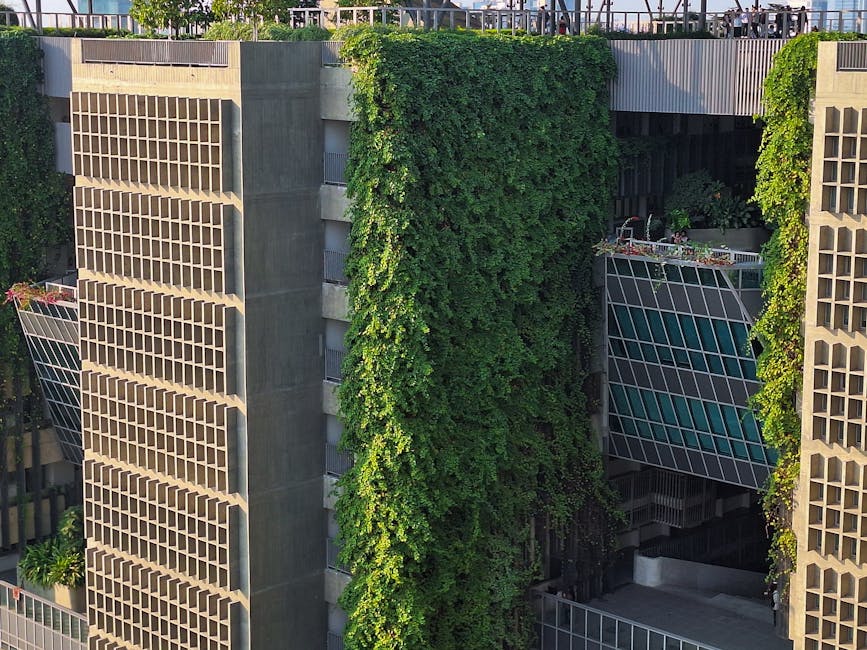
The Living Future: Integrating Green Building Principles into Modern Architecture
In an era defined by climate change, resource depletion, and urban sprawl, architecture stands at a pivotal crossroads. The concept of green building has evolved from a niche movement to a defining paradigm in contemporary architectural practice.
This transformation reflects not only environmental imperatives but also advancements in technology, materials science, and sustainable design methodologies that are reshaping our built environment.
Eco-Conscious Foundations: Defining Green Building
Green building represents a holistic approach to construction that minimizes negative environmental impact through efficiency and sustainability. This philosophy encompasses every stage of a building’s lifecycle – from site selection to demolition.
At its core, green building seeks to create structures that harmonize with their surroundings while reducing energy consumption, water usage, and waste generation. These principles challenge traditional notions of architectural form and function.
The U.S. Green Building Council defines Leadership in Energy and Environmental Design (LEED) as a rating system that certifies buildings based on performance across five categories: Sustainable Sites, Water Efficiency, Energy & Atmosphere, Materials & Resources, and Indoor Environmental Quality.
- Sustainable Sites: Focuses on minimizing ecological disruption during development through strategic land use and stormwater management solutions
- Water Efficiency: Encourages conservation strategies such as low-flow fixtures, rainwater harvesting systems, and greywater recycling technologies
- Energy & Atmosphere: Prioritizes renewable energy integration, high-performance insulation, and smart grid compatibility for optimized energy use
- Materials & Resources: Emphasizes locally sourced, recycled, and rapidly renewable materials while promoting waste reduction practices
- Indoor Environmental Quality: Ensures occupant health through natural lighting optimization, air quality control, and non-toxic material selection
Beyond Certifications: The Philosophy Behind Green Architecture
A true commitment to sustainability extends beyond obtaining LEED certification or other eco-labels. It requires a fundamental rethinking of how we conceptualize space, structure, and human interaction within the built environment.
Pioneering architects have long recognized that buildings should serve dual purposes – providing shelter while actively contributing to ecosystem regeneration. Frank Lloyd Wright’s organic architecture and Buckminster Fuller’s geodesic dome designs anticipated many modern green building principles decades ahead of their time.
The shift toward biophilic design exemplifies this evolving perspective. By integrating nature into architectural spaces through living walls, indoor gardens, and natural ventilation systems, designers enhance both environmental performance and psychological well-being.
Quantifying Impact: The Science Behind Sustainability
Research from the International Energy Agency reveals that commercial buildings account for nearly 40% of global energy-related CO₂ emissions. When combined with residential sector contributions, the figure rises to over 60%, underscoring the urgent need for systemic change.
Green buildings typically consume 25-30% less energy than conventional counterparts while maintaining equivalent comfort levels. This efficiency translates to significant cost savings, estimated at $1.8 trillion annually in global energy costs alone.
Innovative Technologies Shaping Tomorrow’s Structures
Advancements in digital fabrication and artificial intelligence are revolutionizing green building practices. Parametric design software enables architects to simulate complex environmental interactions before any physical construction begins.
Smart building systems equipped with IoT sensors optimize energy use in real-time, adjusting heating/cooling based on occupancy patterns and weather forecasts. These adaptive technologies represent a quantum leap from static, pre-programmed building operations.
Nanotechnology is emerging as another game-changer, with self-cleaning surfaces, photovoltaic glass windows, and phase-change materials capable of regulating interior temperatures without additional energy input.
Material Revolution: Redefining Construction Components
The choice of building materials profoundly influences a structure’s environmental footprint. Traditional concrete production alone accounts for approximately 8% of global greenhouse gas emissions, prompting the search for alternative solutions.
Recycled steel offers a compelling option, requiring significantly less energy to produce compared to virgin metal. Cross-laminated timber (CLT), when responsibly sourced, provides carbon sequestration benefits while offering structural strength comparable to concrete.
Bio-based composites made from agricultural waste products present exciting possibilities. Mycelium-based insulation derived from mushroom roots demonstrates exceptional thermal properties along with inherent fire resistance.
The Lifecycle Perspective: Considering Long-Term Impacts
A truly sustainable building must be evaluated through its entire lifespan, considering extraction, manufacturing, transportation, installation, operation, maintenance, and eventual deconstruction. This cradle-to-grave analysis reveals hidden environmental impacts often overlooked in traditional assessments.
Embodied energy calculations help quantify the total energy required to produce and transport building components. For instance, while aluminum has excellent recyclability attributes, its initial production demands substantial energy inputs that affect overall sustainability metrics.
Circular economy principles advocate for designing buildings that can be disassembled rather than demolished, facilitating material reuse in future projects. This approach reduces landfill contributions and conserves raw resources.
Urban Integration: Creating Sustainable Cities Through Architecture
As cities expand, green building principles become essential tools for creating resilient, livable environments. Urban planners now incorporate green infrastructure elements like rooftop gardens, permeable pavements, and vertical forests into cityscapes.
These features mitigate heat island effects, manage stormwater runoff, and provide habitat corridors for biodiversity. In Milan, Bosco Verticale towers house over 900 trees and 20,000 plants, transforming high-density urban areas into functional ecosystems.
Transit-oriented development models prioritize mixed-use zoning near public transit hubs, reducing reliance on private vehicles. This strategy decreases traffic congestion, lowers pollution levels, and fosters walkable communities with reduced environmental footprints.
Economic Realities: Balancing Cost and Value in Green Projects
While upfront investment for green buildings may appear higher, life-cycle cost analyses frequently demonstrate superior economic returns. Studies indicate that green-certified buildings achieve rental premiums up to 20% greater than standard developments.
Operating expenses are typically lower due to enhanced energy efficiency and reduced maintenance requirements. A study by the World Green Building Council found that occupants of green buildings report increased productivity and satisfaction levels.
Governments worldwide offer financial incentives ranging from tax credits to expedited permitting processes. These measures accelerate market adoption by making sustainable options more economically viable for developers.
Fostering Community: Social Aspects of Green Architecture
Sustainable design goes beyond environmental considerations; it fundamentally shapes social dynamics within communities. Accessible open spaces, natural light penetration, and acoustic comfort contribute to healthier, happier residents.
Community engagement plays a crucial role in successful implementation. Participatory design approaches ensure that local needs and cultural contexts inform the final architectural outcome, fostering a sense of ownership among inhabitants.
Green buildings often include shared amenities like communal gardens, co-working spaces, and multipurpose recreational facilities that encourage social interaction and build stronger neighborhood bonds.
Towards a Regenerative Future: Next Steps in Green Building Evolution
The next frontier in sustainable architecture lies in regenerative design – creating buildings that not only minimize harm but actively restore ecosystems. This paradigm shift challenges us to think about structures as positive contributors rather than passive consumers of resources.
Rainwater harvesting systems integrated with wetland restoration efforts exemplify this principle. Buildings collect and filter water while simultaneously supporting native plant species and wildlife habitats.
Emerging research explores the potential of bio-integrated facades that generate oxygen, capture pollutants, and support pollinator populations. Such innovations suggest a future where architecture becomes an active participant in planetary healing.
Conclusion
The journey towards sustainable architecture is neither linear nor instantaneous. It requires ongoing innovation, collaboration between disciplines, and a willingness to embrace new paradigms of design thinking.
By prioritizing environmental responsibility, technological advancement, and human-centric design, the architectural profession can lead the way in crafting a more sustainable world for generations to come.

news is a contributor at ArkitecTRUE. We are committed to providing well-researched, accurate, and valuable content to our readers.
You May Also Like

Related Posts

How to Choose Green Building: Expert Guide
April 3, 2026
Professional Green Building: Advanced Techniques
April 4, 2026
