The Future is Built: How Cutting-Edge Construction Technology is Reshaping Modern Architecture
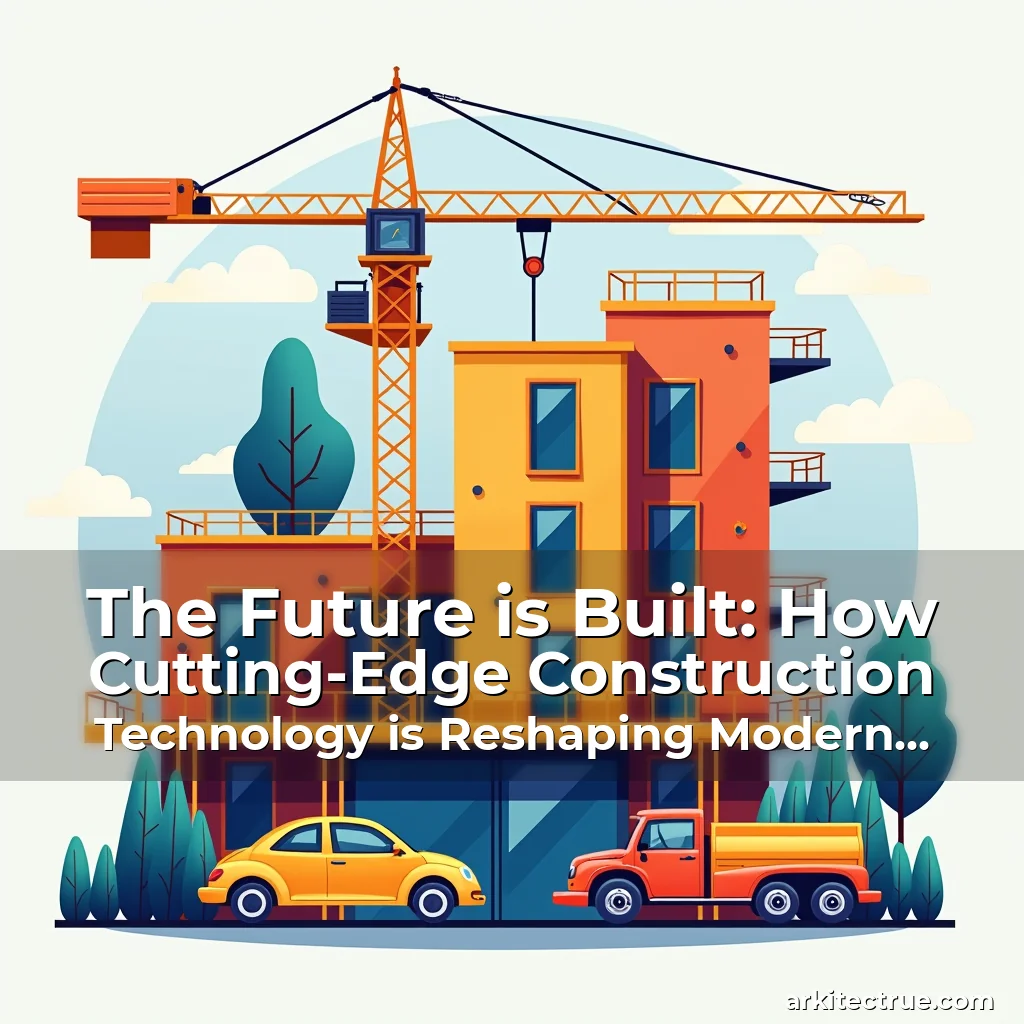
In an era where innovation drives progress, construction technology has emerged as a transformative force within the architecture industry. From AI-driven design tools to robotic construction systems, modern architects are leveraging advanced technologies to create smarter, more sustainable buildings that push the boundaries of traditional engineering.
This revolution extends beyond mere efficiency gains—it’s redefining how we conceptualize, plan, and execute architectural projects across global markets. The integration of digital twins, augmented reality interfaces, and machine learning algorithms now enables designers to visualize complex structures before a single brick is laid, fundamentally altering our approach to spatial creativity.
Beyond Blueprints: Digital Twins Redefine Architectural Visualization
Digital twin technology represents one of the most significant breakthroughs in contemporary construction practices. By creating virtual replicas of physical assets, architects can simulate real-world conditions and test various design scenarios without costly prototypes.
These dynamic models allow for continuous monitoring and optimization of building performance through integrated IoT sensors. This capability not only enhances predictive maintenance but also empowers stakeholders to make data-informed decisions at every stage of development.
- Real-time Performance Monitoring: Sensors embedded within digital twins provide instant feedback on structural integrity, energy consumption patterns, and environmental impact assessments.
- Scenario Testing Capabilities: Architects can experiment with different material choices, lighting configurations, and ventilation systems using interactive simulations before finalizing designs.
The implementation of these systems requires careful consideration of cybersecurity measures since they involve transmitting sensitive operational data between physical structures and their virtual counterparts. However, when properly secured, digital twin networks offer unparalleled advantages in risk mitigation and resource management.
Leading firms such as SOM and Zaha Hadid Architects have already begun integrating digital twin platforms into their workflow processes, demonstrating the practical applications of this revolutionary technology in real-world settings.
Augmented Reality Meets Construction Sites: A New Era of Spatial Intelligence
Augmented reality (AR) is rapidly transforming how professionals interact with construction environments by overlaying digital information onto physical spaces. This immersive experience allows architects to visualize proposed changes in real time while standing on actual job sites.
With AR headsets and mobile apps, teams can walk through unfinished structures to assess proportions, detect potential clashes between mechanical systems and building elements, and verify compliance with design specifications long before construction begins.
One particularly compelling application involves using AR to align prefabricated components precisely during assembly phases. This reduces errors associated with manual measurements and ensures optimal fitment of modular units.
Major software providers like Autodesk and Trimble have developed specialized AR solutions tailored for construction professionals, offering features such as automatic clash detection and real-time collaboration capabilities among project participants.
As adoption rates increase, we’re witnessing improved communication channels between architects, engineers, and contractors—resulting in fewer change orders and significantly reduced rework costs.
Artificial Intelligence: The Invisible Hand Shaping Tomorrow’s Skies
Artificial intelligence is playing an increasingly vital role in streamlining workflows and enhancing decision-making processes throughout the entire construction lifecycle. Machine learning algorithms analyze vast datasets to identify patterns that would be impossible for humans to discern manually.
From automated cost estimation based on historical project data to generative design techniques that explore thousands of permutations in seconds, AI-powered tools are accelerating what was once painstakingly slow work.
AI also contributes to safety improvements through computer vision systems that monitor worker behavior and alert supervisors to hazardous situations in real time. These intelligent surveillance mechanisms help prevent accidents before they occur.
Additionally, natural language processing capabilities enable voice-controlled interfaces that simplify task delegation and documentation procedures for field workers operating under tight deadlines.
Pioneering organizations are now experimenting with autonomous drones equipped with AI processors to conduct inspections, survey terrain, and even assist in placing materials in hard-to-reach locations—all while minimizing human exposure to dangerous environments.
BIM Revolutionizes Collaboration Through Centralized Data Management
BIM (Building Information Modeling) continues to serve as the backbone of modern construction projects by providing a unified platform for multidisciplinary teamwork. Unlike conventional CAD systems, BIM creates intelligent 3D models enriched with metadata detailing everything from material properties to maintenance schedules.
This holistic approach facilitates seamless coordination between architects, structural engineers, MEP specialists, and other key players involved in any given project. Changes made by one discipline automatically update related disciplines’ views, preventing costly miscommunications down the line.
Cloud-based BIM solutions further enhance accessibility by allowing remote access to shared model repositories. This feature proves invaluable for international collaborations involving teams spread across multiple continents.
Moreover, BIM supports sustainability initiatives by enabling precise calculations regarding carbon footprint reduction strategies, daylighting optimizations, and energy-efficient HVAC system designs.
Despite its many benefits, successful BIM implementation demands thorough training programs and robust IT infrastructure investments to ensure smooth operation across diverse organizational ecosystems.
Robotics Transforms On-Site Operations With Precision Automation
The rise of robotics marks another milestone in the evolution of construction technology, offering unprecedented levels of precision and consistency previously unattainable through manual labor alone. Autonomous machines now perform tasks ranging from concrete pouring to steel beam installation with remarkable accuracy.
Robotic arms equipped with high-resolution cameras and tactile sensors can lay bricks with sub-millimeter tolerances—an achievement that would require extensive training for human workers attempting similar feats.
Self-driving haulage vehicles optimize transport logistics around busy job sites by calculating shortest paths and avoiding obstacles autonomously. This results in faster material delivery times and lower fuel consumption figures compared to traditional methods.
Some forward-thinking companies have deployed drone swarms capable of inspecting façades, detecting cracks, and mapping surfaces with centimeter-level resolution—a process that used to take days completed in hours instead.
While initial capital outlays may seem daunting, the long-term savings achieved through increased productivity, reduced waste, and minimized error rates often justify these investments over time.
Sustainable Innovation Drives Green Building Practices Forward
Environmental concerns continue shaping technological advancements in construction industries worldwide. Innovations focused on reducing ecological footprints include self-healing concrete mixtures that repair minor damage autonomously using embedded microcapsules containing healing agents.
Photovoltaic glass panels integrate seamlessly into curtain walls while generating clean electricity from sunlight. This dual-functionality addresses both aesthetic requirements and renewable energy goals simultaneously.
Smart facades featuring electrochromic glazing adjust opacity according to ambient light levels, drastically cutting energy expenditure related to artificial lighting and air conditioning systems.
Researchers are also developing bioengineered materials derived from mycelium fungi or bacteria cultures which naturally absorb CO₂ during growth cycles rather than releasing harmful emissions post-construction.
Such eco-friendly innovations represent crucial steps toward achieving net-zero carbon targets set forth by numerous governments aiming to combat climate change effectively.
The Human Element: Balancing Tech Advancements With Workforce Development
As automation replaces certain roles traditionally performed by skilled tradespeople, there arises a pressing need for workforce reskilling initiatives aimed at preparing future generations for evolving industry demands.
Vocational institutions must adapt curricula to incorporate emerging technologies such as programming fundamentals, data analysis skills, and proficiency with BIM software suites essential for career progression in today’s marketplace.
Industry-academia partnerships facilitate hands-on training opportunities where students gain practical experience working alongside professionals utilizing state-of-the-art equipment found in modern fabrication labs.
Governments play a critical role in funding apprenticeship programs that bridge gaps between theoretical knowledge acquisition and applied technical expertise required for successful employment outcomes.
Ultimately, embracing new technologies shouldn’t come at the expense of human craftsmanship; rather, it presents an opportunity to elevate standards through enhanced capabilities supported by intelligent machinery.
Global Perspectives: Regional Variations In Technological Adoption
Countries exhibit differing degrees of technological penetration depending upon economic factors influencing investment capacity along with regulatory frameworks governing digital transformation efforts within respective jurisdictions.
In nations characterized by rapid urbanization trends, such as China or India, widespread deployment of prefabrication modules combined with AI-assisted site supervision helps address housing shortages efficiently while maintaining quality control benchmarks.
Conversely, established economies benefit from matured infrastructural networks supporting sophisticated implementations including full-scale smart city developments incorporating interconnected IoT devices managing traffic flow, waste disposal, and emergency response protocols comprehensively.
Emerging market regions face challenges relating to inconsistent internet connectivity affecting cloud computing operations necessary for real-time collaborative modeling activities conducted remotely across geographically dispersed teams.
To overcome these disparities, cross-border knowledge exchange programs fostered through international conferences and online educational resources promote equitable dissemination of best practices globally irrespective of regional constraints.
Economic Implications Of Embracing Advanced Construction Technologies
The financial ramifications of adopting innovative construction methodologies extend far beyond immediate upfront expenditures; they encompass broader considerations concerning return on investment timelines and long-term operational efficiencies achievable via optimized resource allocation strategies.
Although implementing cutting-edge solutions might entail higher initial costs due to specialized hardware acquisitions or software licensing fees, these expenses frequently translate into substantial savings realized over extended periods through decreased maintenance needs and prolonged asset lifespans.
Data analytics tools empower stakeholders to forecast revenue streams accurately by simulating occupancy rates under varying market conditions thereby informing strategic business decisions grounded in empirical evidence rather than speculative assumptions.
Firms pioneering digital transformations typically observe accelerated project completion speeds attributable to streamlined approval processes facilitated by automated documentation systems eliminating redundant paperwork burdens hampering traditional bureaucratic procedures.
Furthermore, enhanced transparency afforded by blockchain ledger technologies strengthens trust among investors seeking assurance regarding ethical sourcing practices aligned with ESG principles becoming increasingly relevant within current corporate governance paradigms.
Future Horizons: What Lies Ahead For Construction Technology?
Ongoing research initiatives promise continued breakthroughs poised to redefine yet again how we construct our built environment. Quantum computing’s emergence heralds possibilities for solving intricate optimization problems currently deemed computationally prohibitive under classical architectures.
Nanotechnology advances could lead to creation of ultra-lightweight yet exceptionally strong composite materials suitable for aerospace-grade applications potentially revolutionizing skyscraper construction techniques entirely.
Advancements in additive manufacturing might soon see full-scale 3D printing facilities producing entire residential complexes overnight using locally sourced raw materials thus dramatically reducing transportation-related carbon emissions associated with conventional supply chains.
Integration of biometric authentication systems within wearable tech gear worn by workers promises heightened security controls ensuring only authorized personnel access restricted zones enhancing overall site safety metrics considerably.
As these futuristic visions gradually transition from experimental stages towards commercial viability, the architectural landscape stands on precipice awaiting revelations that will undoubtedly reshape tomorrow’s skyline forevermore.
Conclusion
The convergence of groundbreaking technologies is undeniably reshaping the very fabric of architectural practice. As demonstrated throughout this exploration, innovations spanning digital visualization, artificial intelligence, robotics, and sustainability-focused materials collectively form a powerful ecosystem propelling the industry into uncharted territories.
Moving forward, professionals must remain vigilant observers attuned to continual evolutions occurring at intersections of science fiction meeting engineering feasibility. By staying informed and adaptable, architects can harness these transformative forces to craft spaces that not only meet present-day necessities but also anticipate future societal demands with foresight and ingenuity.

news is a contributor at ArkitecTRUE. We are committed to providing well-researched, accurate, and valuable content to our readers.
You May Also Like