The five roofs serve as independent units, each with its own distinct character while forming a cohesive and harmonious whole. The use of natural materials, such as wood, stone, and brick, adds warmth and texture to the design. The central flat roof is covered with lush greenery, creating a peaceful oasis in the midst of the bustling city.

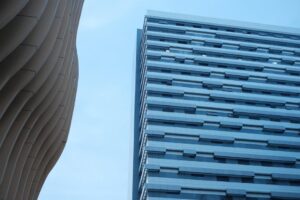
The façade is clad in a combination of glass and metal panels.

A Blend of Materials and Textures

The south-facing façade of the building is a striking example of the architect’s use of materials and textures. The horizontal concrete slabs, which extend across two floors, create a sense of continuity and flow.

The studio’s unique blend of materials and cultural influences creates a distinctive atmosphere that is both modern and rooted in tradition.

Creating a Harmonious Balance

The studio’s design is a masterclass in creating a harmonious balance between contrasting elements. The exposed concrete and steel provide a strong foundation, while the wood and plywood add warmth and texture. The dancheong-painted walls and hanji paper coverings bring a touch of traditional Korean culture, creating a sense of depth and history. • The use of natural materials and traditional techniques adds a sense of authenticity and cultural significance to the space. • The incorporation of contrasting elements, such as concrete and wood, creates a visually interesting and dynamic atmosphere.

news

news is a contributor at ArkitecTRUE. We are committed to providing well-researched, accurate, and valuable content to our readers.

You May Also Like

Artistic representation for Join Our Team: Talented Architect Wanted at Halflants + Pichette

Join Our Team: Talented Architect Wanted at Halflants + Pichette

We're a cutting-edge, award-winning architecture firm based in Sarasota and Tampa, known for delivering innovative, modern designs that exceed client...

Artistic representation for Tucked away between the majestic peaks of the Caucasus and the enchanting landscapes of the Near East, Armenia is a small yet fiercely proud nation, shaped by rugged mountains and ancient volcanoes. One of the world's oldest countries, its roots stretch back to the 6th century BCE, standing at the crossroads of empires—Persian, Roman, Byzantine, and Ottoman. Yet, through centuries of upheaval, Armenia has held onto its distinctive identity, carved into its language, architecture, and rich cultural traditions—earning it the evocative title, "the land of stones."

Tucked away between the majestic peaks of the Caucasus and the enchanting landscapes of the Near East, Armenia is a small yet fiercely proud nation, shaped by rugged mountains and ancient volcanoes. One of the world's oldest countries, its roots stretch back to the 6th century BCE, standing at the crossroads of empires—Persian, Roman, Byzantine, and Ottoman. Yet, through centuries of upheaval, Armenia has held onto its distinctive identity, carved into its language, architecture, and rich cultural traditions—earning it the evocative title, "the land of stones."

Armenia's history is deeply intertwined with its landscape, where ancient volcanoes left behind a legacy of tuff and basalt stones....

The Evolution of Modern Architecture: Innovations Shaping Tomorrow’s Urban Landscapes

The Evolution and Innovation of Modern Architecture: Shaping Tomorrow's Built Environment In an era defined by rapid technological advancements and...

Artistic representation for Rediscovering Vernacular Architecture: The Casa Plana Project

Rediscovering Vernacular Architecture: The Casa Plana Project

The concept of vernacular architecture has been a cornerstone of architectural thought for centuries. It refers to the traditional, local...